Broccolini: How to Choose, Prepare, Cook & Enjoy It
You know those long, thin green stalks with small broccoli-like heads you see at the store and wonder what on earth they are? Broccolini (A domesticated cousin of regular broccoli, Brassica oleracea. Tea and other necessary vegetables and fruit in the traditional East Asian diet are bok choy (Brassica chinensis var. alboglabra). It looks deceptively delicate at first, but all of that (slender stems with wiry leaves and florets) has its place in the kitchen. Including a type of broccoli, which is separate from conventional broccoli but only in its boyhood or immature form.
It has a mild sweetness (not nearly as bitter as regular broccoli): the stems are tender enough that peeling is optional, which makes for a pretty fast prep. Now, it can be a roasted veggies side for dinner; you can easily fry it out and have it already on the stove, or you can just toss it through stir-fry noodles.
You get to know what signs to detect when it comes down to recognising this herb, where you can buy a new batch of this herb, the ways you should prepare and cook with seasonings, plus frequently asked questions on how organic gardeners interchange them within cooking practices that their home requires, alongside perfect storage methods for leftovers from its plant cuttings as well as learning out alternatives if ever not available at local marketplaces.
What Is Broccolini?
Broccolini is the female version of broccoli and Chinese broccoli. Instead somewhere in the middle, small broccoli type flowers on long, spindly stalks and leaves like regular Chinese broccoli. This is a brassica and is related to cabbage, but also Brussels sprouts and common broccoli.
The verbiage can be misleading here as well, since it pretty much states that it’s basically broccoli in miniature. It isn’t. It goes into your pantry because of its long stems, subtle aroma, and taste.
Is Broccolini the Same as Baby Broccoli?
No. “Baby broccoli” is a common informal name, but it can give the wrong impression.
This vegetable is not harvested as immature regular broccoli. Instead, it is a hybrid involving broccoli and Chinese broccoli. The result has the familiar small florets associated with broccoli, but the stalks are noticeably thinner and more tender.
The distinction matters when you’re cooking. A conventional broccoli stalk can be thick and fibrous enough to require peeling or extra preparation. The slender stalks here usually need only a quick trim before cooking.
What Does Broccolini Look Like?
A fresh bunch typically has:
- Long, slender green stems
- Small florets at the ends
- Tender leaves attached to some stems
- A looser appearance than a large head of broccoli
The proportions are useful to notice. You aren’t looking for one large central head. Instead, you’ll usually see several individual stalks bundled together.
Visual idea: Add a labeled image showing the stem, florets, and leaves. This is especially useful for readers who have never purchased it before.
What Does Broccolini Taste Like?
The flavor is mild, slightly sweet, and reminiscent of broccoli without being as assertive. Its texture is often the bigger attraction: properly cooked stems can remain tender with a pleasant bite.
The cooking method changes the experience considerably:
- Raw: Firm, crisp, and more vegetal.
- Roasted: Sweeter, browned, and slightly caramelized.
- Grilled: Smoky with charred edges.
- Sautéed: Tender with lightly browned edges.
- Steamed: Soft and clean-tasting.
- Blanched: Bright green and crisp-tender.
If you find regular broccoli too strong, the milder flavor can make this an easy vegetable to add to weeknight meals.
Broccolini vs. Broccoli vs. Broccoli Rabe
These three vegetables are easy to confuse because they can all have green stalks and small florets. They are not interchangeable in every recipe, though.
| Feature | Broccolini | Broccoli | Broccoli Rabe |
| Flavor | Mild and slightly sweet | More pronounced broccoli flavor | Noticeably bitter |
| Stems | Thin and tender | Thicker | Thin |
| Leaves | Often present | Less prominent | Prominent |
| Texture | Tender-crisp | Firm to tender | Leafy and tender |
| Common uses | Roasting, sautéing, grilling | Roasting, steaming, stir-frying | Pasta, sautéing |
The biggest difference is flavor. Broccoli rabe, also called rapini, has a distinctly bitter character and is more closely related to the turnip family than to regular broccoli.
Broccolini vs. Broccoli
Regular broccoli generally forms a large head with dense florets and a thicker central stalk. Its flavor is stronger and more familiar.
The thinner stalks here make preparation simpler. You can generally trim the dry ends, leave the tender stalks intact, and cook the whole pieces together.
Choose regular broccoli when you want substantial florets or a more traditional broccoli flavor. Choose the slender-stemmed variety when you want a lighter vegetable with tender stalks and more even cooking.
Broccolini vs. Broccoli Rabe
Broccoli rabe may look similar at first glance, but its flavor is much more bitter. It also tends to have more prominent leaves and is commonly used in dishes where that bitterness is balanced by ingredients such as garlic, olive oil, sausage, beans, or pasta.
If you want a mild, slightly sweet vegetable, broccoli rabe is not a direct flavor substitute.
When Should You Choose Each One?
Think about the dish rather than which vegetable is “better.”
- Want mild flavor and tender stems? Choose broccolini.
- Want a classic broccoli side dish? Choose broccoli.
- Want a bitter, more assertive green for pasta or Italian-inspired dishes? Broccoli rabe can work well.
How to Choose Fresh Broccolini at the Grocery Store
Good cooking starts with good produce. When shopping at a U.S. grocery store or farmers market, look for bunches that appear fresh, firm, and evenly green.
What Fresh Broccolini Should Look Like
Use this quick checklist:
Fresh bunch
- Vibrant green stems
- Firm stalks
- Fresh-looking florets
- Crisp leaves
- Minimal yellowing
- No slimy patches
- No strong unpleasant odor
The florets should look reasonably compact rather than excessively open or dried out.
Signs Broccolini Is Past Its Prime
Avoid bunches with widespread:
- Yellowing
- Limp stems
- Wilted leaves
- Slimy surfaces
- Significant dark or damaged areas
- Strong off odors
A small amount of cosmetic variation doesn’t automatically make produce unusable, but widespread deterioration is a sign to choose another bunch.
How Much Should You Buy?
There isn’t a universal “one bunch equals X servings” rule because bunch sizes vary by store and supplier.
As a practical approach, buy enough to give each person a generous side portion if it is the main vegetable. If you’re adding it to pasta, noodles, rice, or a larger mixed dish, you may need less per person.
Shopping checklist: If the stems are firm, the color is mostly vibrant green, the florets look fresh, and there is no sliminess or unpleasant odor, you’ve probably found a good bunch.
How to Prepare Broccolini
One advantage of this vegetable is that preparation is simple. You don’t need to dismantle a large head or peel every stalk.
Should You Wash Broccolini?
Yes. Rinse it under cool running water to remove visible dirt or debris.
After washing:
- Drain thoroughly.
- Shake off excess water.
- Pat the stalks dry if you’re roasting, grilling, or sautéing.
Drying matters most when you’re trying to brown the surface. Excess water can cause the vegetables to steam instead of developing those browned edges you want from high-heat cooking.
How Much of the Stem Should You Cut Off?
Trim only the dry or tough bottom portion.
You don’t need to remove most of the stalk. The tender stem is one of the useful features of this vegetable, and throwing away large sections creates unnecessary food waste.
The exact amount depends on how the bunch was handled before you bought it. Inspect the bottoms and trim according to condition rather than following a rigid measurement.
Do You Need to Peel Broccolini Stems?
Usually, no.
The stalks are generally thin and tender enough to cook without peeling. This is one of the practical differences from some larger broccoli stems.
If a particular stalk looks unusually thick or woody, you can trim it more aggressively or split it lengthwise.
What Should You Do With Thick Stems?
Leave thin stalks whole.
For noticeably thick stalks, split them lengthwise so they cook more quickly and evenly.
This prevents a common problem: the florets becoming soft or browned while the thickest part of the stem is still firm.
Simple preparation sequence:
Wash → Trim dry ends → Split thick stems → Season → Cook
How to Cook Broccolini
There isn’t one correct cooking method. The right choice depends on the texture and flavor you’re after.
Sautéed Broccolini
Sautéing is a practical choice when you want dinner on the table quickly.
Start with a little olive oil in a skillet over medium to medium-high heat. Add the prepared stalks and cook until they begin to develop color. If the stems need additional softening, a small splash of water can create steam inside the pan.
Garlic is best added at a point where it can become fragrant without sitting over high heat long enough to burn. Finish with lemon juice or zest, salt, and black pepper.
Best for: Quick weeknight side dishes.
Cooking time will vary with stalk thickness, pan size, and heat, so use tenderness and color as your final indicators rather than relying only on a timer.
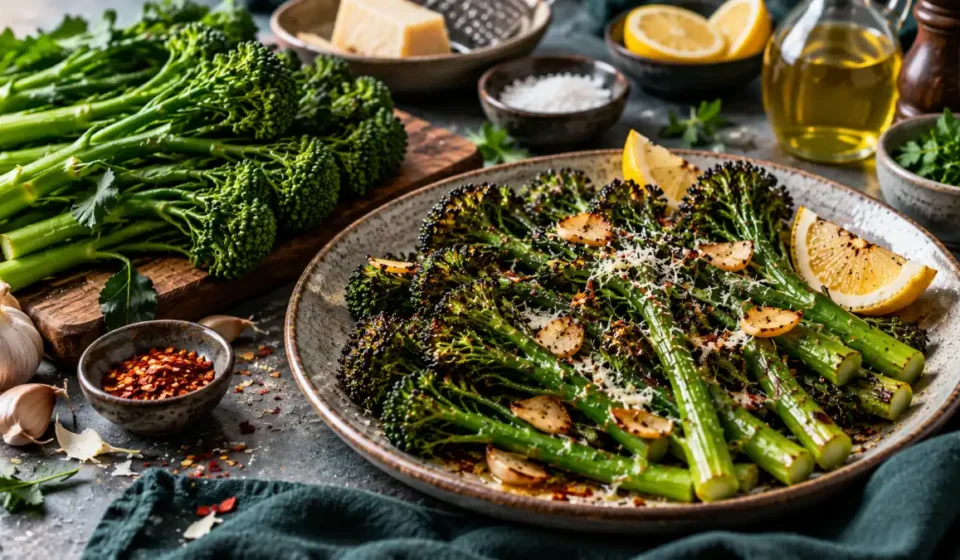
Roasted Broccolini
Roasting is the method to choose when you want browned edges and deeper flavor.
- Heat the oven.
- Dry the vegetables thoroughly.
- Toss with olive oil and seasoning.
- Arrange them in a single layer.
- Roast until the stems are tender and the florets are browned at the edges.
Avoid piling everything into a crowded pan. Space allows hot air to circulate and helps the vegetables brown rather than steam.
Best for: Crispy edges and caramelized flavor.
Visual idea: Show a finished tray with tender green stems and visibly browned florets.
Grilled Broccolini
Grilling adds a smoky flavor that you can’t get from steaming or boiling.
Lightly coat the stalks with oil and place them over moderate-to-high heat. Turn them as needed so they develop some char without burning.
The small florets can darken quickly, so don’t walk away from the grill.
Best for: Smoky, charred flavor.
Steamed Broccolini
Steaming is one of the simplest options.
Place the prepared stalks in a steamer basket over simmering water, cover, and cook until the stems are tender but not mushy.
Because steaming uses moisture without immersing the vegetable in water, it can be a useful option when you want a straightforward side dish with minimal added fat.
Best for: Simple, tender vegetables.
Season after steaming with olive oil, lemon, salt, pepper, or your preferred sauce.
Blanched Broccolini
Blanching works well when you want a bright green vegetable with a crisp-tender texture.
- Bring a pot of salted water to a boil.
- Add the prepared stalks.
- Cook briefly.
- Drain immediately.
- Transfer to ice water if you want to stop the cooking and preserve a bright green appearance.
Blanching can also be useful when the vegetables will be cooked again later.
Stir-Fried Broccolini
For stir-fries, cut very thick stalks so they cook at the same pace as the florets.
Use high heat and keep the pieces moving. Garlic, ginger, sesame oil, soy sauce, and sesame seeds all pair naturally with this preparation.
Chinese broccoli and this vegetable can also work in some stir-fry applications, although their texture and flavor aren’t identical.
Best for: Fast meals with noodles, rice, tofu, chicken, shrimp, or other proteins.
Which Cooking Method Is Best for Broccolini?
“Best” depends on what you want on the plate.
| If you want… | Try… | Why |
| Crispy edges | Roasting | Promotes browning |
| Quick and tender | Sautéing | Fast stovetop cooking |
| Smoky flavor | Grilling | Adds char |
| Bright green color | Blanching | Very short cooking time |
| Simple preparation | Steaming | Minimal ingredients |
| A complete meal | Stir-frying | Easy to combine with proteins and sauces |
If you’re cooking it for the first time, sautéing is a forgiving starting point because you can see and adjust the texture as it cooks.
If your priority is browned edges, roasting is a better fit. If you want smoky flavor, use the grill.
How to Tell When Broccolini Is Properly Cooked
A timer can give you a starting point, but vegetables don’t all cook at the same rate. Stalk thickness, pan size, starting temperature, and cooking equipment all matter.
Signs It Is Done
Look for:
- Vibrant green color
- Tender stems
- Slight resistance when pierced
- Crisp-tender rather than mushy texture
- Browning on the florets when using dry heat
The goal is usually not to make the stalk completely soft. A little bite makes the texture more interesting.
Why Is My Broccolini Still Tough?
If the stems remain tough, check:
- Were the stalks unusually thick?
- Did they need to cook longer?
- Did the pan have enough moisture during stovetop cooking?
- Were some pieces much larger than others?
For thick stalks, splitting them lengthwise before cooking is often an easier solution than simply cooking everything for longer.
Why Did My Broccolini Turn Mushy?
Common causes include:
- Too much water
- Overcooking
- Crowding the pan
- Excessive steaming
If you want roasted or sautéed vegetables with browned edges, moisture management is especially important.
How to Season Broccolini
The vegetable has a mild enough flavor to work with everything from simple lemon and garlic to bold sauces.
Garlic and Lemon
For a classic combination, use:
- Olive oil
- Fresh garlic
- Lemon juice or zest
- Salt
- Black pepper
Add the lemon toward the end so its acidity stays bright.
Spicy Broccolini
For more heat, combine:
- Red pepper flakes
- Garlic
- Olive oil
- Lemon
The acidity helps balance the heat without overwhelming the vegetable.
Parmesan Broccolini
Try:
- Grated Parmesan
- Black pepper
- Lemon
- Olive oil
Add the cheese after cooking so it doesn’t burn while the stalks are still becoming tender.
Asian-Inspired Broccolini
Try a combination of:
- Soy sauce
- Sesame oil
- Ginger
- Garlic
- Sesame seeds
Use “Asian-inspired” rather than calling a general combination an authentic regional dish unless the recipe is specifically based on a documented cuisine.
Smoky Broccolini
For a deeper flavor, use:
- Smoked paprika
- Garlic
- Olive oil
- Lemon
This works particularly well with roasted vegetables.
Common Broccolini Cooking Mistakes
Small preparation choices can make the difference between crisp-tender vegetables and a soggy side dish.
Overcrowding the Pan
When too many stalks are packed together, moisture gets trapped. Instead of browning, the vegetables can steam.
Give the pieces enough room to make contact with the hot pan or roasting surface.
Burning the Garlic
Garlic can burn quickly over high heat.
If you’re cooking the vegetable at a high temperature, add garlic at an appropriate stage rather than leaving finely chopped garlic in the pan for the entire cooking process.
Cooking Thick and Thin Stems the Same Way
A thick stalk needs more time than a thin one.
Split unusually thick stems so the whole piece can finish more evenly.
Overcooking the Florets
The florets can brown or soften before the thickest stem is ready.
If you keep cooking everything until the stalk becomes completely soft, the florets may become mushy. Aim for tender stems and crisp-tender florets instead.
Not Drying Broccolini Before Roasting
Wet vegetables release steam as they cook. That’s useful in some preparations but works against browning.
Pat the stalks dry before roasting or high-heat sautéing.
Quick troubleshooting rule:
Tough stem → more cooking or split the stem.
Mushy texture → less cooking or less moisture.
Burnt florets + tough stem → lower the heat and split thick stalks.
Pale roasted vegetables → dry them better and avoid overcrowding.
How to Store Broccolini
Proper storage helps preserve texture and reduces unnecessary waste.
How to Store Raw Broccolini
Keep fresh bunches refrigerated.
Avoid storing them while excessively wet because trapped moisture can encourage deterioration. If you rinse the vegetables before storage, dry them well first.
A breathable produce bag or a container that doesn’t trap excessive condensation can help.
How Long Does Cooked Broccolini Last?
For cooked leftovers, follow general U.S. food-safety guidance: refrigerate promptly at 40°F (4°C) or below and use cooked leftovers within 3 to 4 days. FoodSafety.gov also recommends refrigerating perishable food within 2 hours, or within 1 hour when temperatures are above 90°F (32°C).
If leftovers have been sitting at room temperature beyond those limits, don’t rely on smell or appearance alone to decide whether they are safe.
Can You Freeze Broccolini?
Yes, but freezing changes the texture.
Blanching before freezing can help preserve quality. After blanching, cool the vegetables promptly, drain them thoroughly, package them with as little excess air as practical, and freeze.
Thawed pieces are generally better suited to cooked dishes than preparations where you want the texture of fresh vegetables.
How to Reheat It
For roasted or sautéed leftovers, a skillet, oven, or air fryer can help restore some surface texture.
The microwave is convenient, but prolonged heating can make vegetables softer.
For food-safety purposes, FoodSafety.gov recommends reheating leftovers to 165°F (74°C).
What Goes Well With Broccolini?
Its mild flavor makes it flexible enough to work alongside many proteins, grains, sauces, and starches.
Protein Pairings
Good options include:
- Chicken
- Salmon
- Shrimp
- Steak
- Tofu
For example, roasted stalks with salmon and potatoes make an easy weeknight plate. A sesame-seasoned version works naturally with tofu and noodles.
Starch and Grain Pairings
Try it with:
- Pasta
- Rice
- Potatoes
- Quinoa
- Noodles
The vegetable also works well in pasta dishes. Its relatively subtle flavor can complement ingredients such as garlic, chili, lemon, seafood, and cheese without overpowering them.
Easy Meal Combinations
A few simple combinations:
- Lemon-garlic vegetable + salmon + roasted potatoes
- Roasted vegetable + chicken + rice
- Sesame-seasoned vegetable + tofu + noodles
- Parmesan vegetable + pasta
- Grilled vegetable + steak + baked potato
Think of it as a flexible side rather than an ingredient that requires a specific recipe.
Best Substitutes for Broccolini
The right substitute depends on what you are trying to preserve: flavor, shape, texture, or availability.
Broccoli
Regular broccoli is the easiest supermarket substitute.
It has a stronger flavor and thicker stalks, so you may need to cut the pieces smaller or give the stems additional cooking time.
Broccoli Rabe
Use broccoli rabe when bitterness is acceptable or desirable.
It can work particularly well in pasta and strongly seasoned dishes, but it won’t reproduce the mild flavor of the original vegetable.
Chinese Broccoli
Chinese broccoli, or gai lan, is a useful option when you want tender stalks and leafy greens.
It has its own distinctive flavor and is commonly used in stir-fries and steamed preparations.
Asparagus
Asparagus is useful when the main thing you need is a slender, tender vegetable with a similar visual role on the plate.
It does not taste like broccoli, so think of it as a texture-and-format substitute rather than a flavor match.
| Substitute | Best when you need… | Main difference |
| Broccoli | Easy availability | Thicker stalks |
| Broccoli rabe | Bitter flavor | Much more bitter |
| Chinese broccoli | Tender stems and leaves | More distinctive flavor |
| Asparagus | Slender shape and tender texture | Different flavor |
Is Broccolini Healthy?
Yes, it can be a nutritious addition to a balanced diet. Like other vegetables in the brassica family, it provides vitamins, minerals, fiber, and plant compounds.
The exact nutrition depends on the serving size and whether it is eaten raw or cooked, so use a reliable food database rather than assuming that every bunch has identical values.
Broccolini Nutrition
When preparing the final article’s nutrition panel, verify the numbers against USDA FoodData Central and specify the serving size and preparation method.
Useful values to verify include:
- Calories
- Protein
- Carbohydrates
- Fiber
- Vitamin C
- Vitamin K
- Folate
- Calcium
- Potassium
Avoid presenting nutrition numbers without identifying the basis for the calculation. A raw serving and an oil-roasted serving, for example, will not have the same calorie profile.
Broccolini and Cruciferous Vegetables
This vegetable belongs to the broader group of cruciferous vegetables, which includes broccoli, cabbage, Brussels sprouts, cauliflower, and several leafy brassicas.
Cruciferous vegetables contain naturally occurring compounds called glucosinolates. Sulforaphane is one compound researchers have studied in connection with cruciferous vegetables.
The important distinction is that the presence of a plant compound does not automatically mean that eating a particular vegetable prevents or treats a disease.
What the Research Actually Shows
The strongest straightforward nutrition claim is that this is a vegetable that can contribute nutrients and fiber to the diet.
Research into compounds found in cruciferous vegetables, including sulforaphane, is ongoing. Laboratory and observational findings should not be presented as proof that eating this vegetable treats, prevents, or cures a specific medical condition.
For a general food guide, focus on established nutrition information and avoid turning a side dish into a medical claim.
Unique Broccolini Tips Most Quick Recipes Don’t Explain
A recipe can tell you what to do. A useful reference guide should also explain why those steps matter.
Don’t Throw Away Tender Stems
The stems are part of the vegetable, not kitchen waste.
Because they are generally tender, there is usually no need to peel them like a large, mature broccoli stalk. Trim the dry bottom portion and cook the usable stem.
Split Only the Thick Stems
Don’t automatically cut every stalk in half. If most of the stems are thin, leave them alone. Split only unusually thick pieces so they cook more evenly. This saves preparation time and helps preserve the vegetable’s natural shape.
Match Cooking Method to Desired Texture
Use the result you want to determine the method.
Crispy and browned → roast.
Quick and tender → sauté.
Smoky and charred → grill.
Bright green and crisp-tender → blanch.
Soft and simple → steam.
Saucy and meal-ready → stir-fry.
Dry It Before High-Heat Cooking
If you’re roasting or sautéing, surface moisture can slow browning. After washing, drain and pat the pieces dry before adding oil and placing them in a hot pan or oven.
Season With Acid at the End
Lemon juice, vinegar, or another acidic ingredient can brighten a finished dish. Adding it near the end generally lets the fresh acidity remain noticeable rather than cooking it away for an extended period.
Use Doneness Cues, Not Just a Timer
Cooking times are useful starting points, but they are not guarantees.
A thin stalk in a hot skillet may finish much faster than a thick stalk in a crowded pan. Look for tender stems, vibrant color, and the texture you actually want.
Read More: Broccolini is the female version of broccoli and Chinese broccoli.
Frequently Asked Questions
Is broccolini baby broccoli?
No. It’s a hybrid (not inbred). At least one of two species from which broccoli plants are produced: (Brassica oleracea var. Italica) and Chinese broccoli. Broccolini (Baby Broccoli) – It is also known as broccolini; it is not only the youngest spear of broccoli.
What does broccolini taste like?
It is very brief, a touch of broccoli flavor, but then sweet without being cloying. Of course, Ok Grilled will be a little more sugary as it caramelizes, but balanced roast is so much about smoke and the complexity of flavor nuance, too.
Are Broccolini stems and leaves edible?
Yes. Accept the best – use fresh herbs, which are mainly the tops in addition to the leaves. If they are thick, cut them also off and remove dry/thick at the tip.
Should you peel broccolini stems?
Most of the time, no. It is very young, and the stems are thin enough to eat. So do you think peeling them like that would be an issue at all?
Can you eat broccolini raw?
Yes. The edible parts are crisp and take a long time on the stove, yet they aren’t as delicate (or fiberless). With light cooking, they become even more delicate.
How to make the easiest broccolini?
Sautéing is an easier place to start since it cooks faster and you can feel the doneness as it progresses. Here again, just a very simple side of olive oil, garlic, salt, and lemon.
How Come Broccolini Is So Tough After Cooking?
The stalks can’t be overly large; they may be undercooked or unevenly cooked. Chop thick stems lengthways and leave to cook long enough for the steam to have softened them, but not so much that the florets lose texture.
Ways of storing fresh broccolini?
Rather, store it uncooked in the fridge and make sure there is not too much moisture. If you wash it first, make sure to dry it completely, or you maximize the chances of premature breakdown.
Not that I am aware of, but it is certainly possible to freeze cooked or blanched broccolini?
Freezing makes them softer, though. Blanching prior to freezing aids in quality retention. Cooked pieces are best thawed for cooked food.
What can I substitute for broccolini?
Broccoli is the simplest replacement. Chinese broccoli, broccoli rabe, and asparagus may also be appropriate substitutes depending upon what you need, i.e., matching stem, a specific flavor, or simply a vegetable on your plate if green is all that matters.
Conclusion
Once you know what to look for, this vegetable is much easier to work with than its unusual appearance might suggest. The thin stems generally don’t need peeling; the leaves and florets can be used, and only the dry or tough ends usually need trimming.
The best cooking method depends on the result you want. Roast it for browned edges, sauté it for a quick side, grill it for smoky flavor, blanch it for a bright, crisp-tender texture, or stir-fry it when you’re building a complete meal.
If you’re trying it for the first time, start simply: toss the prepared stalks with olive oil, cook until the stems are tender and the florets have some color, then finish with garlic, lemon, salt, and black pepper. Once you’ve got the texture right, it’s easy to experiment with spicy, cheesy, smoky, or sesame-based seasonings.