Best Foreign Horror Films: 20 Brilliant International Movies Worth Watching
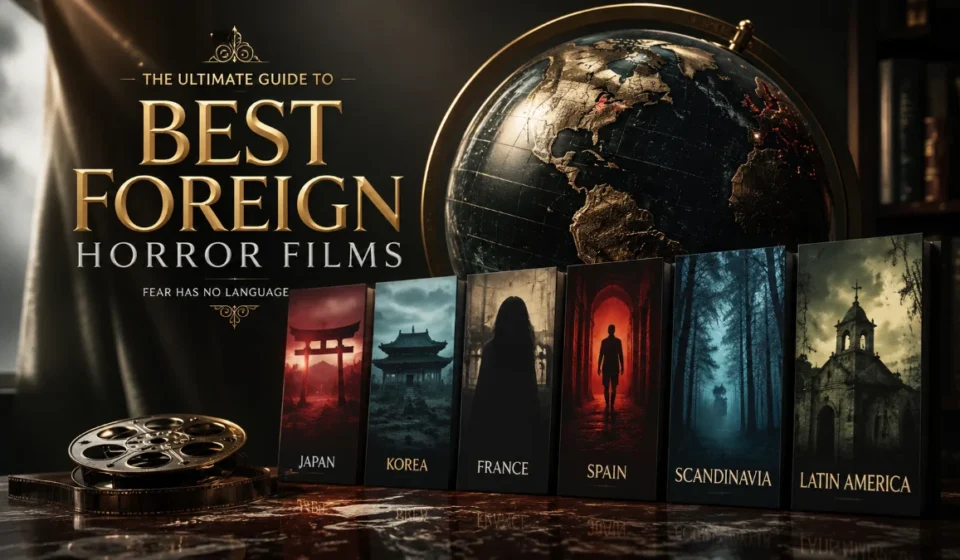
The best foreign horror films prove that terrifying cinema does not need to follow a Hollywood formula. From Japanese ghost stories and Korean supernatural mysteries to French extreme horror, Spanish Gothic tales, Swedish vampire dramas, Iranian-set folklore, Taiwanese occult cinema, and German Expressionism, international filmmakers have developed remarkably different ways to create fear. Some rely on atmosphere and uncertainty; others use folklore, social tension, violence, or disturbing ideas.
This guide focuses primarily on international and non-English-language horror made outside the mainstream Hollywood system. The 20 selections were chosen for a combination of lasting influence, critical reputation, originality, cultural significance, filmmaking craft, and how effectively each film represents a particular horror tradition. “Best” remains an editorial judgment rather than an objective ranking, so the list is organized to help you find the right film for the experience you want.
The Best Foreign Horror Films at a Glance
If you want a quick recommendation, the table below gives you the essential details before the deeper explanations.
| Film | Country / Region | Year | Horror Style | Best For |
| Cure | Japan | 1997 | Psychological/supernatural | Slow-burn unease |
| Ringu | Japan | 1998 | Supernatural / J-horror | Cursed-object horror |
| Audition | Japan | 1999 | Psychological/extreme | Disturbing slow burn |
| Onibaba | Japan | 1964 | Folklore / psychological | Japanese classic horror |
| A Tale of Two Sisters | South Korea | 2003 | Psychological/supernatural | Gothic family horror |
| The Wailing | South Korea | 2016 | Supernatural mystery | Folklore and ambiguity |
| Train to Busan | South Korea | 2016 | Zombie/action | Fast-paced horror |
| Martyrs | France | 2008 | Extreme/philosophical | Experienced viewers |
| Eyes Without a Face | France | 1960 | Gothic / body horror | Classic European horror |
| [REC] | Spain | 2007 | Found footage | Claustrophobic terror |
| The Orphanage | Spain | 2007 | Supernatural / ghost | Emotional horror |
| Let the Right One In | Sweden | 2008 | Vampire/drama | Atmospheric horror |
| Under the Shadow | Iran-set | 2016 | Supernatural / wartime | Psychological tension |
| Nosferatu | Germany | 1922 | Gothic / vampire | Horror history |
| Incantation | Taiwan | 2022 | Occult / found footage | Modern supernatural horror |
| Kwaidan | Japan | 1965 | Folklore/anthology | Stylized ghost stories |
| The Devil’s Backbone | Spain / Mexico | 2001 | Ghost / historical | Gothic atmosphere |
| When Evil Lurks | Argentina | 2023 | Possession / supernatural | Bleak modern horror |
| La Llorona | Guatemala | 2019 | Supernatural/political | Folklore and history |
| Cronos | Mexico | 1993 | Body / supernatural | Unusual vampire horror |
The selections deliberately span different periods and styles. A 1922 silent film such as Nosferatu is included for its historical importance, while When Evil Lurks represents a much newer strain of uncompromising supernatural horror. That range matters because international horror did not begin with the late-1990s J-horror boom.
What Does “Foreign Horror” Mean?
“Foreign horror” is a popular search term rather than a formal film-studies category. Here, it primarily refers to horror from outside the mainstream English-language Hollywood tradition, with particular emphasis on films originally made in languages other than English.
Country and language are not always interchangeable, however. International productions can involve several countries, while a film may be set in a country different from the one that produced it. Under the Shadow, for example, is a UK-Qatar production set in Tehran and built around Iranian cultural and supernatural ideas. BFI discusses its Iranian setting and the way the Iran-Iraq War forms part of its context.
For that reason, this guide considers:
- Production country or countries
- Original language
- Cultural setting and traditions
- Influence or importance within horror cinema
- The kind of horror experience the film provides
The same distinction applies to Spanish-language cinema. Spanish horror means horror from Spain, while Spanish-language horror can also include films from Mexico, Argentina, Chile, Guatemala, and other countries.
1. Cure – Japan (1997)
Kiyoshi Kurosawa’s Cure is an outstanding choice for viewers who prefer psychological unease to conventional jump scares.
The story follows a detective investigating a series of seemingly connected murders. What makes the film so unsettling is how little certainty it provides. Strange encounters, detached performances, empty spaces, and unexplained behavior gradually create the feeling that something is wrong without ever becoming completely understandable.
Instead of depending on a conventional monster, Cure makes uncertainty itself frightening. Its horror lingers because the film raises questions that are never reduced to comfortable answers.
Criterion describes Cure as a landmark of the newer wave of Japanese horror and emphasizes its psychological and existential dimensions.
Why watch it: For intelligent, atmospheric horror built around psychological destabilization and unanswered questions.
2. Ringu – Japan (1998)
Hideo Nakata’s Ringu is one of the defining films of modern J-horror and an essential choice for supernatural-horror fans.
Its premise is simple: a videotape carries a deadly curse, and anyone who watches it receives a warning that death will follow. By turning an ordinary piece of technology into a supernatural object, the film creates fear through anticipation rather than constant violence.
Its influence became particularly visible after the 2002 American remake The Ring. Yet the Japanese original remains compelling because of its restrained pacing, eerie imagery, and sense of inevitability.
Why watch it: For classic cursed-object horror and one of the most influential supernatural premises of modern international cinema.
3. Audition – Japan (1999)
Takashi Miike’s Audition is built around patience.
The film initially resembles a restrained relationship drama in which a widower creates a fictional audition to meet potential partners. The story develops slowly, allowing the audience to settle into one kind of movie before its tone changes dramatically.
That structural decision is the source of much of its power. The horror works partly because the film makes viewers wait.
It is therefore better suited to audiences comfortable with slow-burn storytelling and disturbing material than to viewers looking for immediate scares.
Why watch it: For a psychological horror experience whose gradual tonal transformation is central to its impact.
4. Onibaba – Japan (1964)
Kaneto Shindo’s Onibaba demonstrates that Japanese horror was already distinctive decades before the international J-horror cycle.
Set during a period of conflict, the film follows two women surviving in a harsh natural environment as fear, desire, deception, and violence begin to consume their lives. Folklore and supernatural suggestion contribute to the atmosphere without reducing the story to a conventional monster narrative.
The landscape is almost a character itself, and the film’s stark visual style makes its isolation particularly oppressive.
Why watch it: For historically important Japanese horror rooted in folklore, human desire, and psychological tension.
5. A Tale of Two Sisters – South Korea (2003)
Kim Jee-woon’s A Tale of Two Sisters takes inspiration from a traditional Korean folktale and turns it into an elegant psychological and supernatural horror film.
Two sisters return home and encounter increasingly disturbing tensions within their family. Grief, memory, family conflict, and supernatural possibilities become difficult to separate.
Its ambiguity is important. Rather than explaining every disturbing event immediately, the film encourages the audience to reconsider what it has seen.
Why watch it: For Gothic family horror where psychological trauma and supernatural uncertainty overlap.
6. The Wailing – South Korea (2016)
Na Hong-jin’s The Wailing is one of the strongest choices for viewers who enjoy horror mixed with mystery.
Strange events begin affecting a rural Korean community after the arrival of a mysterious outsider. Suspicion, illness, violence, shamanistic ritual, and supernatural possibilities gradually become intertwined.
The film takes its time, and that patience is crucial. It creates an atmosphere in which characters-and the audience-are repeatedly forced to reconsider what they believe.
BFI highlights the film’s combination of Korean folklore, mystery, supernatural horror, and slow-building atmosphere.
Why watch it: For a sprawling supernatural mystery in which uncertainty becomes part of the fear.
7. Train to Busan – South Korea (2016)
Yeon Sang-ho’s Train to Busan is the ideal recommendation for viewers who want international horror with a faster pace.
A zombie outbreak spreads through a high-speed train, leaving passengers with little space and rapidly shrinking options. The setting naturally intensifies the action because characters cannot simply escape into a wide-open environment.
The film also gives its action emotional weight through its relationships and choices about survival and sacrifice.
Why watch it: For accessible zombie horror that combines speed, suspense, action, and emotional stakes.
8. Martyrs – France (2008)
Pascal Laugier’s Martyrs belongs at the end of this guide.
It is frequently discussed in connection with New French Extremity, a loose critical term applied to confrontational French films that explore violence, physical vulnerability, sexuality, transgression, and difficult philosophical ideas.
Martyrs begins with revenge-horror elements before becoming much more severe and conceptually challenging. Its graphic violence is central to the experience.
Why watch it: For experienced horror viewers who want extremely intense material with philosophical ambitions.
9. Eyes Without a Face – France (1960)
Georges Franju’s Eyes Without a Face offers a striking contrast to Martyrs.
The film follows a surgeon determined to restore his daughter’s disfigured face. Although its premise creates opportunities for disturbing body-horror imagery, Franju relies heavily on restraint, clinical atmosphere, tragedy, and visual elegance.
Its power demonstrates that body horror can be deeply unsettling without depending on contemporary levels of graphic violence.
Why watch it: For elegant European horror combining Gothic atmosphere, identity, surgery, and bodily vulnerability.
10. [REC] – Spain (2007)
Jaume Balagueró and Paco Plaza’s [REC] is an essential international found-footage film.
A television reporter and cameraman accompany firefighters to an apartment building after an emergency is reported. What initially appears manageable quickly becomes far more dangerous, while authorities prevent those inside from leaving.
The confined setting is crucial. Every corridor and apartment becomes part of the threat, and the camera perspective keeps the audience close to the characters’ uncertainty.
The film later inspired the American remake Quarantine.
Why watch it: For claustrophobic, fast-escalating horror that makes excellent use of found footage.
11. The Orphanage – Spain (2007)
J.A. Bayona’s The Orphanage is an excellent choice if you want a supernatural horror story driven by emotion.
A woman returns to the former orphanage where she grew up with her family. When her son becomes fascinated by an imaginary companion, disturbing elements from the past begin resurfacing.
The film’s horror is closely connected to motherhood, grief, memory, and loss. Its emotional foundation gives the haunted-house framework considerable weight.
Why watch it: For atmospheric ghost horror where emotional stakes matter as much as scares.
12. Let the Right One In – Sweden (2008)
Tomas Alfredson’s Let the Right One In gives vampire mythology a remarkably intimate treatment.
At its center is a lonely child who forms a relationship with a mysterious girl. The film combines friendship, isolation, violence, vulnerability, and vampirism without turning the story into conventional monster action.
Its cold Scandinavian environment reinforces the feeling of loneliness that runs through the film.
Why watch it: For vampire horror that is melancholic, character-driven, and atmospheric.
13. Under the Shadow – Iran-Set (2016)
Babak Anvari’s Under the Shadow places supernatural horror inside a Tehran apartment during the Iran-Iraq War.
A mother and daughter already face the pressures of wartime life when frightening events begin occurring around their home. The supernatural threat therefore develops alongside very real dangers and social restrictions.
The film draws on the idea of the jinn, while its historical setting gives the horror an additional dimension. The result is not simply a haunted-house story; fear operates on both supernatural and everyday levels.
Why watch it: For supernatural horror that connects folklore with war, family, restriction, and vulnerability.
14. Nosferatu – Germany (1922)
F.W. Murnau’s Nosferatu is one of the foundational works of cinematic vampire horror.
The German silent film was an unauthorized adaptation of Bram Stoker’s Dracula, with Count Dracula transformed into Count Orlok. Its shadows, distorted imagery, expressionist design, and unforgettable creature make it an essential part of horror history.
Modern viewers should expect a very different pace and style from contemporary horror. Its importance is partly historical, but its visual imagination remains striking.
BFI continues to identify the film as an influential example of German Expressionist cinema.
Why watch it: For early vampire cinema and the visual foundations of modern horror.
15. Incantation – Taiwan (2022)
Incantation uses found-footage techniques to build an occult horror story around ritual, taboo, religion, family, and supernatural consequences.
Its fragmented structure asks the viewer to piece together information instead of receiving the mythology in a straightforward sequence. That uncertainty makes the audience feel increasingly involved in the film’s supernatural problem.
Why watch it: For modern occult horror that combines found footage with ritual and cursed-media ideas.
16. Kwaidan – Japan (1965)
Masaki Kobayashi’s Kwaidan adapts four traditional Japanese ghost stories.
Its greatest strength is visual. Stylized sets, carefully composed images, color, movement, and sound transform the stories into something closer to cinematic folklore than conventional modern horror.
The film is beautiful without losing its eerie quality, making it an especially useful recommendation for viewers interested in the relationship between folklore and film.
Why watch it: For highly stylized Japanese ghost stories and classic international cinema.
17. The Devil’s Backbone – Spain / Mexico (2001)
Guillermo del Toro’s The Devil’s Backbone places supernatural horror against the Spanish Civil War.
A young boy encounters a ghost in an orphanage while the adults around him deal with violence, betrayal, fear, and political conflict. The ghost story consequently becomes inseparable from the human consequences of war.
The supernatural elements provide atmosphere, but the film’s emotional and historical dimensions are equally important.
Why watch it: For Gothic ghost horror that connects the supernatural with history and trauma.
18. When Evil Lurks – Argentina (2023)
Demián Rugna’s When Evil Lurks presents possession and supernatural corruption in a bleak rural environment.
Rather than relying on the familiar structure of many possession films, it builds a world in which evil can spread through communities and where attempts to control it can have disastrous consequences.
The film is deliberately harsh and contains disturbing imagery, making it more suitable for experienced horror viewers.
Why watch it: For bleak, unpredictable possession horror with an uncompromising tone.
19. La Llorona – Guatemala (2019)
Jayro Bustamante’s La Llorona draws on the Latin American legend of La Llorona while connecting the supernatural story to Guatemala’s history of political violence.
The ghost is therefore more than a folkloric monster. The film uses supernatural imagery to explore guilt, memory, victims, and unresolved historical trauma.
It is a strong example of horror functioning as both genre entertainment and a way of confronting difficult history.
Why watch it: For folklore-based horror with political and historical meaning.
20. Cronos – Mexico (1993)
Guillermo del Toro’s feature debut, Cronos, approaches immortality and vampirism from an unusual direction.
An antique device gives its user renewed vitality, but the apparent gift comes with a terrible cost. Instead of relying on familiar Gothic vampire conventions, the film uses machinery, bodily transformation, obsession, and mortality to create something distinctive.
Why watch it: For inventive Mexican horror and an unusual supernatural interpretation of vampirism.
How to Choose the Right Foreign Horror Film
The phrase best foreign horror films covers such a wide range of experiences that choosing by country alone is not always useful. A viewer looking for a terrifying ghost story needs a different recommendation from someone who wants extreme body horror or a fast zombie thriller.
| If you want… | Start with… | Why |
| Classic supernatural dread | Ringu | Restrained cursed-object horror |
| Psychological unease | Cure | Ambiguity and existential tension |
| A disturbing slow burn | Audition | Gradual transformation in tone |
| Korean supernatural mystery | The Wailing | Folklore, ritual, mystery, uncertainty |
| Zombie action | Train to Busan | Speed, confinement, emotional stakes |
| Found-footage terror | [REC] | Claustrophobia and escalation |
| Gothic family horror | A Tale of Two Sisters | Grief, memory, supernatural uncertainty |
| Vampire drama | Let the Right One In | Melancholy and character focus |
| Extreme horror | Martyrs | Graphic and philosophically challenging |
| Wartime supernatural horror | Under the Shadow | Jinn folklore and historical pressure |
| Classic vampire cinema | Nosferatu | Expressionist imagery and influence |
| Occult horror | Incantation | Ritual, taboo, and uncertainty |
| Historical ghost horror | The Devil’s Backbone | Supernatural story with wartime themes |
| Latin American possession horror | When Evil Lurks | Bleak and unpredictable |
| Folklore and political horror | La Llorona | Mythology and historical memory |
Where Should Beginners Start?
If international horror is new to you, you do not need to begin with the most experimental or disturbing film.
Start with Train to Busan if you want an immediately accessible genre experience. Its zombie premise and action structure require little adjustment, while its character relationships provide additional emotional weight.
Choose Ringu or The Orphanage if supernatural horror is more appealing. Both offer strong atmosphere without requiring the extreme content found in Martyrs.
Move to A Tale of Two Sisters and Cure if you enjoy psychological uncertainty and stories that reward closer attention.
Try The Wailing and Kwaidan if you want to explore folklore and cultural storytelling traditions more deeply.
Leave Martyrs and similarly extreme films for later if you are unsure about graphic violence. International horror is much broader than extreme cinema, so you do not need to start there.
Best Foreign Horror Films by Horror Style
For ghost and supernatural horror
Ringu, The Orphanage, A Tale of Two Sisters, Kwaidan, and The Wailing are excellent starting points. They demonstrate several different ways supernatural horror can use ghosts, curses, folklore, family trauma, and uncertainty.
For psychological horror
Choose Cure or Audition. Both rely on psychological discomfort, but their methods are very different. Cure creates a cold sense of existential uncertainty, while Audition uses an unusually patient setup before changing direction.
For zombies and outbreak horror
Train to Busan is the most accessible choice, while [REC] offers a more claustrophobic and immediate experience. Both use restricted spaces to increase tension.
For vampire horror
Nosferatu provides the historical foundation, Let the Right One In offers an emotional modern interpretation, and Cronos approaches vampirism through bodily transformation and technology.
For extreme and disturbing horror
Martyrs sits at the harshest end of the guide. Audition and When Evil Lurks can also be disturbing, although their methods and themes are quite different.
For folklore-based horror
Kwaidan, The Wailing, Under the Shadow, and La Llorona are particularly useful comparisons because each connects supernatural ideas to a distinct cultural or historical context.
Why International Horror Feels Different
International horror is not automatically better than Hollywood horror. Its main advantage is the range of perspectives available to the viewer.
Filmmakers work with different folklore, religious traditions, histories, social anxieties, landscapes, family structures, and cinematic traditions. Those influences can shape what becomes frightening and how a supernatural threat is explained-or deliberately left unexplained.
Japanese horror, for example, has produced influential stories involving curses, ghosts, technology, and psychological uncertainty. Korean filmmakers have frequently blended horror with family drama, mystery, social issues, and history. Spanish and Latin American filmmakers have used supernatural stories to engage with memory and political violence, while Iranian-set horror can connect folklore with wartime and social pressures.
These are broad tendencies, not universal formulas. No national cinema can be reduced to a single style.
That variety is what makes international horror particularly valuable for viewers who feel familiar Hollywood structures have become predictable.
Are Foreign Originals Better Than Hollywood Remakes?
Not automatically.
A remake can change its setting, characters, pacing, mythology, visual language, or explanation of the supernatural. Those differences can produce a genuinely different film rather than a simple copy.
Some useful comparisons include:
- Ringu → The Ring
- Ju-On: The Grudge → The Grudge
- [REC] → Quarantine
Watching the original after a remake can reveal which ideas came from the source and which were altered for another audience.
Rather than assuming the original must be superior, compare atmosphere, performances, pacing, cultural context, visual style, and how each version handles its central horror idea.
Read more: Best Foreign Horror Films: 20 Brilliant International Movies Worth Watching
Do You Need Subtitles to Enjoy Foreign Horror?
Not necessarily.
For most films in this guide, the original-language version with subtitles preserves the actors’ voices, timing, accents, and emotional delivery. Those elements are part of the performance and can matter considerably in quiet horror.
Dubbing can still be a perfectly reasonable choice, especially when a viewer strongly prefers it. The availability and quality of dubbed tracks vary by film, distributor, and region.
The important point is that subtitles should not prevent you from exploring international cinema. After a few films, reading them usually becomes much less noticeable.
Frequently Asked Questions
What are the best foreign horror films of all time?
There is no universally accepted single winner. Cure, Ringu, The Wailing, [REC], Let the Right One In, Martyrs, Nosferatu, and Kwaidan are strong choices for different reasons, including influence, originality, atmosphere, cultural significance, and filmmaking craft.
What is the best foreign horror movie for beginners?
Train to Busan is one of the easiest starting points because its zombie-action structure is immediately accessible. For supernatural horror, try Ringu or The Orphanage. If you prefer psychological stories, Cure is a strong next step.
What is the difference between J-horror and K-horror?
J-horror is commonly associated with ghosts, curses, psychological dread, and unsettling everyday environments. South Korean horror often blends supernatural elements with family drama, mystery, history, social commentary, or action. These are broad tendencies rather than strict definitions.
Is Pan’s Labyrinth a foreign horror film?
Pan’s Labyrinth is more accurately described as a dark fantasy with substantial horror elements. Its disturbing creatures, violence, bleak setting, and themes of death and childhood trauma explain its frequent inclusion in horror discussions. It is a Spanish-language film directed by Guillermo del Toro.
What is New French Extremity?
New French Extremity is a loose critical term associated with confrontational French cinema, particularly around the late 1990s and 2000s. The films vary considerably, but many explore graphic violence, sexuality, physical vulnerability, transgression, and difficult psychological or philosophical ideas.
Which foreign horror movies are the most disturbing?
Martyrs is among the harshest films in this guide, while Audition, When Evil Lurks, and High Tension can also be difficult viewing experiences. Disturbing is subjective, so these recommendations should be treated as content guidance rather than an objective ranking.
What is the difference between Spanish horror and Spanish-language horror?
Spanish horror specifically refers to horror from Spain. Spanish-language horror is broader and includes films from Mexico, Argentina, Chile, Guatemala, and other countries. The Orphanage and [REC] are Spanish films, while Cronos is Mexican and When Evil Lurks is Argentine.
Is Nosferatu still worth watching?
Yes, particularly if you are interested in horror history, vampire cinema, or visual filmmaking. Its silent-film style differs greatly from contemporary horror, but its expressionist imagery and influence remain important.
Are foreign horror films better with subtitles or dubbing?
For many viewers, subtitles are preferable because they preserve the original performances. Dubbing can still be enjoyable and convenient, particularly when a high-quality track is available. The choice ultimately depends on your preference and the specific release.
Which country makes the best horror movies?
There is no objective answer. Japan, South Korea, France, Spain, Sweden, Germany, Iran, Taiwan, Mexico, Argentina, Guatemala, Brazil, and many other countries have produced important horror cinema. The better choice depends on whether you prefer ghosts, psychological horror, folklore, vampires, zombies, extreme cinema, or another style.
Final Verdict
The best foreign horror films are not connected by one formula. Their greatest strength is precisely how differently they approach fear.
Start with Ringu for classic supernatural dread, Cure for psychological unease, The Wailing for Korean folklore and mystery, or Train to Busan for fast-paced zombie horror. Choose [REC] if you want found-footage tension, Let the Right One In for a more emotional vampire story, and Nosferatu if you want to explore the history of cinematic horror.
For folklore and historical themes, Kwaidan, Under the Shadow, The Devil’s Backbone, and La Llorona offer very different experiences. If you are ready for extreme material, Martyrs is one of the most demanding choices on the list, while When Evil Lurks offers a modern and uncompromising take on supernatural corruption.
What makes international horror worth watching is not that one country is inherently scarier than another. It is that filmmakers around the world have found countless ways to turn folklore, history, technology, family, religion, isolation, violence, and human vulnerability into fear.