Ground Turkey Recipes for Easy, Flavorful Meals
Turkey is not just for turkey burgers! It gets high marks in tacos, skillet dinners (think taco meat), rice bowls, pasta dishes, chili, meatballs, stuffed vegetables, and make-ahead meals with the right seasonings and a touch of moisture. The key is to complement how you cook it with the presentation: leaner turkeys become saucier; bolder spices; burgers, meatballs, and meatloaf also demand careful attention to keep them hydrated and textured.
Whether you have been stalking a pound of turkey in your refrigerator, or are just meal planning for the week ahead, these are suggestions that help you know what to actually make and then keep it from being dry.
What Can You Make With Ground Turkey?
Ground turkey can be particularly useful in recipes when you can incorporate flavor from aromatics, spices, vegetables, and sauces. Crispy taco spice on it for a fast filling, cooked in tomato sauce for pasta, made into light meatballs, or combined with rice plus veggies to meal prep.
Good for chili, stuffed peppers, lettuce wraps, enchiladas, meatloaf, soups, burgers, one-pan dinners. Whilst it may be nice to simply ask whether ground turkey is a suitable substitute for some other minced meat, what you really want to know is what exactly the rest of the dish delivers. Wet foods naturally add liquid; bound foods like burgers and meatballs require a bit more work.
Find Your Dinner Fast
| If you want… | Good options | Typical cooking style |
| Dinner in under 30 minutes | Tacos, stir-fry, skillet meals | Stovetop |
| A one-pan meal | Taco skillet, turkey and vegetables | Skillet |
| Comfort food | Pasta, meatloaf, chili | Pot or oven |
| Meal prep | Rice bowls, meatballs, chili | Batch cooking |
| A handheld meal | Burgers, tacos, quesadillas | Skillet or grill |
| More vegetables | Stuffed peppers, zucchini boats, stir-fry | Oven or stovetop |
| A freezer-friendly meal | Meatballs, chili, Bolognese | Batch cooking |
25 Easy Ground Turkey Recipes
These ideas cover fast stovetop dinners, family-style meals, meal-prep options, and dishes worth freezing. Cooking times will vary with the specific recipe, equipment, and ingredient size, so use time as a planning guide and temperature-not appearance alone-to determine when poultry is safely cooked.
1. Ground Turkey Taco Skillet
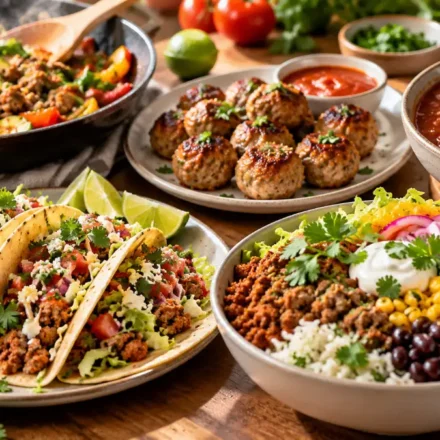
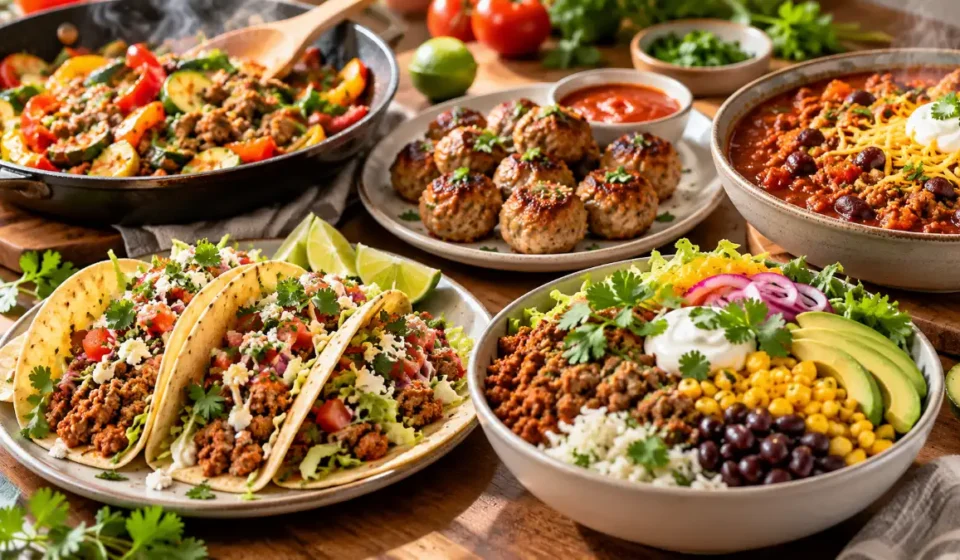
A taco skillet is an easy place to start because the turkey cooks alongside plenty of flavorful ingredients. Brown it with onion, garlic, chili powder, cumin, and other taco seasonings, then add tomatoes or salsa, beans, corn, and peppers. The tomato or salsa component does more than add flavor; it also gives lean turkey moisture. Finish the skillet with cheese if you like, then serve it over rice, scoop it into tortillas, or pile it onto shredded lettuce. Avocado, cilantro, lime, and sliced jalapeños make useful fresh toppings.
2. Ground Turkey Tacos
For a quick taco filling, cook ground turkey taco with chopped onion before adding garlic and a well-balanced taco seasoning. A splash of water, broth, or salsa can help the seasoning coat the meat and prevent the filling from tasting dry. Serve it in corn or flour tortillas with shredded lettuce or cabbage, salsa, avocado, cheese, lime, and your favorite taco toppings. The same filling can go into crunchy taco shells or lettuce cups.
3. Ground Turkey Rice Bowls
Rice bowls are one of the easiest ways to turn cooked turkey into a complete meal. Start with seasoned ground turkey, add rice or another grain, choose a couple of vegetables, and finish everything with a sauce and something fresh or crunchy.
A simple formula is:
Turkey + grain + 2 vegetables + sauce + fresh or crunchy finish
For example, pair garlic-ginger turkey with rice, broccoli, carrots, scallions, and a savory sauce. For meal prep, keep delicate herbs and crunchy toppings separate until serving.
4. Juicy Turkey Meatballs
Turkey meatballs need a little more care than loose ground turkey because shaping and baking can make a very lean mixture firm or dry. A panade-breadcrumbs softened with milk or another suitable liquid-is one way to retain moisture. Depending on the recipe, grated onion, egg, herbs, cheese, or other moisture-rich ingredients can also contribute flavor and texture.
Mix only until the ingredients are evenly distributed. Form the meatballs gently rather than compressing them tightly. Bake them for hands-off cooking or brown them in a skillet before finishing them in sauce.
5. Ground Turkey Chili
Chili is particularly forgiving with lean turkey because tomatoes, beans, broth, and other liquid ingredients surround the meat as it cooks. Brown the turkey with onion, then build flavor with garlic, chili powder, cumin, tomatoes, beans, and any additional peppers or spices your recipe calls for. Give the chili enough simmering time for the flavors to come together.
Top individual bowls with avocado, cilantro, cheese, scallions, lime, or crushed tortilla chips. Chili also reheats well, making it useful for batch cooking.
6. Turkey Burgers
A good turkey burger should be juicy and tender rather than compact and rubbery. Start by handling the mixture as little as practical. Add seasoning and any moisture-building ingredients your recipe uses, form loose patties, and avoid repeatedly pressing them during cooking. Unlike chili or pasta sauce, a burger has no surrounding sauce to protect it from drying out. That makes ingredient choice and temperature control especially important.
Serve on toasted buns with lettuce, tomato, pickles, onions, or a flavorful sauce. Turkey burgers also work well with toppings such as avocado or sautéed onions.
7. Ground Turkey Pasta
Ground turkey and tomato-based pasta sauce are natural partners. Brown the turkey with onion and garlic, add tomatoes or your preferred pasta sauce, then simmer long enough for the meat to take on the sauce’s flavor. Spinach, mushrooms, zucchini, or bell peppers can add vegetables without turning the dish into a separate project. Toss the sauce with pasta and finish with herbs or grated cheese if appropriate. For busy nights, this is also an easy way to stretch one pound of turkey across several servings.
8. Turkey Bolognese
Turkey Bolognese deserves more than simply replacing beef in an existing sauce. Build the base deliberately with finely chopped aromatics, brown the turkey, then add tomatoes and the other liquids and seasonings in your chosen recipe. A longer, gentle simmer gives the meat time to absorb flavor and lets the sauce develop beyond the taste of plain browned turkey and tomatoes. Serve it with pasta, spoon it over polenta, or make extra for another meal later in the week.
9. Ground Turkey Stir-Fry
A ground turkey stir-fry is ideal when dinner needs to move quickly. Prepare the sauce and cut the vegetables before the pan gets hot, because once cooking starts, the meal comes together fast. Garlic and ginger make a useful aromatic base. Broccoli, cabbage, bell peppers, carrots, green beans, mushrooms, or snap peas can all work depending on what you have.
Brown the turkey, cook the vegetables until crisp-tender, then add a savory soy-based or other appropriate stir-fry sauce. Serve with rice or noodles and finish with scallions or sesame seeds if desired.
10. Ground Turkey Lettuce Wraps
Lettuce wraps work best when the filling has strong savory flavor and a little texture to contrast with the crisp leaves. Cook ground turkey with aromatics such as garlic, ginger, and scallions, then add a flavorful sauce. Finely chopped vegetables or water chestnuts can provide crunch. Spoon the filling into sturdy lettuce leaves just before eating so they stay crisp. For a more substantial dinner, serve rice alongside the wraps or add some directly to each portion.
11. Ground Turkey Sweet Potato Skillet
Ground turkey and sweet potatoes make an easy one-pan foundation. The key is cutting the sweet potatoes into small, fairly even pieces so they finish cooking at roughly the same time. Start the potatoes first if necessary, then add turkey, onion, peppers, greens, or other vegetables. Choose a seasoning direction-smoky, Tex-Mex, or herb-forward-rather than adding unrelated spices. A splash of broth or sauce near the end can bring everything together without turning the skillet watery.
12. Turkey Stuffed Peppers
Bell peppers create natural individual portions for a turkey filling. Cook the meat with onion and seasonings, then combine it with tomatoes, rice or another grain, and any beans or vegetables that suit the recipe. Fill halved or hollowed peppers and bake until the peppers are tender and the filling is hot. Cheese can be added near the end if desired. For easier weeknight assembly, make the filling ahead and refrigerate it separately, then fill and bake the peppers when you’re ready to eat.
13. Mediterranean Ground Turkey Bowls
For a Mediterranean-inspired bowl, season ground turkey with ingredients such as garlic, oregano, parsley, and complementary spices. Add rice or another grain, then layer in cucumber, tomatoes, greens, or roasted vegetables. A yogurt-based or tahini-style sauce provides moisture and contrast, while lemon and fresh herbs brighten the finished bowl. Keeping the fresh vegetables and sauce separate from the warm turkey and grain until serving also makes this combination convenient for meal prep.
14. Ground Turkey Enchiladas
Enchiladas are well suited to lean turkey because the filling cooks under plenty of sauce. Prepare seasoned turkey with onion and any beans, peppers, or other fillings you want to include. Roll the mixture in tortillas, arrange them in a baking dish, cover with enchilada sauce, and add cheese if desired. Bake until the filling is hot and the sauce is bubbling. Finish with fresh cilantro, avocado, lime, or sliced scallions for contrast.
15. Ground Turkey Quesadillas
Quesadillas are a smart way to use leftover seasoned turkey from taco night. Spread cooked turkey over a tortilla with cheese and optional additions such as peppers, onions, corn, or beans. Cook until the tortilla is crisp and the filling is hot, then slice into wedges. Serve with salsa, guacamole, or another appropriate dip. Planning this meal after tacos lets one batch of cooked turkey do two jobs without making dinner feel identical on consecutive nights.
16. Turkey Sloppy Joes
Ground turkey works particularly well in Sloppy Joes because the meat is coated in sauce rather than served on its own. Brown turkey and onion, then add a tomato-based sauce with savory, tangy, and slightly sweet elements. The goal is balance: too much sweetness can overwhelm the mild turkey, while acidity and savory seasoning keep the filling lively. Spoon onto toasted buns and serve with crunchy slaw, pickles, salad, or roasted vegetables.
17. Ground Turkey Meatloaf
Turkey meatloaf requires a different approach from taco meat because the mixture stays together in a large loaf while cooking. Use an appropriate binder and moisture-rich ingredients, season throughout, and mix gently. Packing the mixture too firmly can create a dense loaf. A glaze or sauce on top adds another layer of flavor. Use a food thermometer to check doneness in the center rather than relying on the exterior color.
18. Ground Turkey Lasagna
Ground turkey can form the savory base of a lasagna meat sauce. Brown it with aromatics, simmer it with tomato sauce, then layer it with pasta, cheese, and the other components of your preferred lasagna. Because the meat cooks in sauce and then bakes between layers, it has plenty of opportunity to absorb flavor. Lasagna is especially practical when you’re feeding several people or want a dish that can be assembled ahead.
19. Ground Turkey Zucchini Boats
Zucchini boats turn ground turkey into a vegetable-forward dinner without requiring complicated preparation. Halve the zucchini, scoop out enough of the center to create room for filling, and avoid leaving the shell so thin that it collapses. Cook the turkey with aromatics and sauce, fill the zucchini, then bake until tender. Because zucchini contains a lot of water, avoid overloading the filling with thin liquids. A thicker tomato sauce generally works better than a watery mixture.
20. Turkey Meatball Soup
Turkey meatballs can turn a simple broth into a satisfying dinner. Pair them with vegetables and add pasta, rice, or another grain if you want a heartier soup. Keep the meatballs modest in size so they cook evenly and are easy to eat with a spoon. Greens such as spinach can be stirred in toward the end so they stay fresh-tasting. If freezing soup containing pasta, consider freezing the soup and pasta separately when possible; pasta can soften considerably during storage and reheating.
21. Ground Turkey Burrito Bowls
Burrito bowls take the convenience of a rice bowl in a distinctly Tex-Mex direction. Start with seasoned ground turkey and rice, then add beans, corn, peppers, salsa, lettuce, avocado, lime, or cheese according to your preferences. For meal prep, portion the turkey, rice, beans, and cooked vegetables together. Keep salsa, avocado, lettuce, and other wet or delicate toppings separate until serving so the bowl retains better texture.
22. Turkey Kofta
Ground turkey can also be used for kofta-style preparations when paired with the appropriate herbs, aromatics, and warm spices. Shape the seasoned mixture into small patties, logs, or another form appropriate to the recipe and cook until safely done. Serve with pita or flatbread, rice, salad, fresh herbs, and a yogurt- or tahini-based accompaniment. Because kofta traditions vary considerably across regions and cuisines, use culturally accurate recipe naming and ingredients rather than treating “kofta” as a generic label for any seasoned meatball.
23. Ground Turkey Cabbage Skillet
Cabbage and ground turkey make a practical one-pan meal from relatively simple ingredients. Brown the turkey, add onion or garlic, then cook thinly sliced cabbage until it softens while retaining some texture. Season the skillet in one clear direction: tomato and herbs, garlic and ginger, or another complementary combination. Cabbage Skillet shrinks significantly as it cooks, so a pan that looks crowded at first can become much more manageable after several minutes.
24. Homemade Turkey Breakfast Sausage
Ground turkey isn’t limited to lunch and dinner. It can become breakfast sausage when seasoned with ingredients such as sage, black pepper, garlic, and other complementary breakfast-sausage spices. Mix gently, form small patties, and cook until safely done. Serve alongside eggs, potatoes, toast, or breakfast vegetables. You can also crumble the seasoned mixture instead of forming patties and use it in breakfast bowls or egg dishes.
25. Ground Turkey Meal-Prep Bowls
Meal-prep bowls work best when you think of them as a flexible system rather than one fixed recipe.
Try these three combinations:
Southwest: seasoned turkey + rice + beans + corn + salsa + lime
Mediterranean-inspired: herb-seasoned turkey + grain + cucumber + tomato + yogurt-style sauce
Teriyaki-style: garlic-ginger turkey + rice + broccoli + carrots + teriyaki-style sauce + scallions
Prepare the sturdy ingredients in batches, then keep fresh toppings and sauces separate; doing so will preserve their texture.
How to Make Ground Turkey Taste Better
Ground turkey has a relatively mild flavor, which is an advantage when you build the dish deliberately. Instead of trying to make every turkey recipe taste like beef, use ingredients that complement the meal you’re actually cooking.
Start With Aromatics
Aromatics create the first layer of flavor. Onion and garlic work in many dishes, while ginger and scallions make more sense in certain stir-fries and lettuce wraps. Give onions enough time to soften or brown where appropriate before rushing to the next ingredient. Add garlic and other quick-cooking aromatics later so they don’t burn.
Match the Seasoning to the Dish
Rather than using one all-purpose turkey seasoning for everything, let the finished meal guide you.
| Flavor direction | Useful starting ingredients |
| Tex-Mex | Cumin, chili powder, garlic, oregano |
| Italian-inspired | Garlic, basil, oregano, tomato |
| Mediterranean-inspired | Garlic, oregano, parsley, lemon |
| Asian-inspired | Ginger, garlic, soy-based seasoning, scallions |
These are starting points, not rigid rules. Adjust the seasoning to the specific recipe and ingredients you’re using.
Add Moisture Where It’s Needed
Moisture doesn’t have to mean pouring liquid into every pan. The right approach depends on the dish. Salsa and tomatoes work naturally in tacos and chili. Tomato sauce surrounds turkey in pasta. Broth can help certain skillet dishes and soups. Grated onion or a panade can help form mixtures such as meatballs. A turkey burger, meatball, and pot of chili shouldn’t all be treated the same way.
Build Flavor in Layers
If the finished turkey tastes bland, adding seasoning only at the table often won’t provide the same depth as seasoning throughout the cooking process. Build flavor as the recipe develops: cook the aromatics properly, season the turkey appropriately, add a flavorful sauce or liquid when the dish calls for it, then finish with ingredients that bring freshness or contrast. Lime, lemon, herbs, scallions, cheese, yogurt-style sauces, or crunchy vegetables can make the final bite much more interesting.
How to Cook Ground Turkey Without Drying It Out
Dry turkey is usually a combination of ingredient choice, cooking method, and cooking time-not an unavoidable characteristic of the meat.
Don’t Overwork Burgers, Meatballs or Meatloaf
Once ground turkey is mixed with binders and seasonings, handle it gently. Vigorous or prolonged mixing can create a tighter, denser texture in formed dishes. Combine the ingredients until they are evenly distributed, then stop. Shape burgers and meatballs firmly enough to hold together but not so tightly that they become compressed.
Use the Right Cooking Method
Match the method to the meal:
- Loose ground turkey: skillet
- Meatballs: oven or skillet
- Burgers: skillet or grill
- Chili and Bolognese: pot or Dutch oven
When browning loose turkey, give the pan enough surface area. Constant stirring can prevent good browning, while an overcrowded pan can trap steam.
Cook Ground Turkey to a Safe Internal Temperature
Ground turkey should reach a safe minimum internal temperature of 165°F (73.9°C). USDA recommends checking poultry with a food thermometer rather than relying on appearance alone. Color and other visual signs aren’t dependable measures of food safety. Insert the thermometer into the thickest area of burgers, meatloaf, or other formed ground-turkey dishes without measuring against the pan. For current U.S. food-safety guidance, consult the USDA Food Safety and Inspection Service food-safety basics.
Which Ground Turkey Should You Use?
Packages of ground turkey can vary in fat content and in which parts of the bird are included. The leanest package isn’t automatically the best choice for every cooking method.
Lean vs. Higher-Fat Ground Turkey
Very lean ground turkey is particularly easy to use in chili, pasta sauce, taco fillings, and other dishes where sauce supplies moisture and flavor. For exposed preparations such as burgers, the recipe needs to account more carefully for moisture and texture. Meatballs and meatloaf also benefit from a thoughtfully designed mixture. Check the package label rather than assuming all ground turkey has the same composition.
Match Ground Turkey to the Recipe
| Dish | What matters most | Why |
| Burgers | Moisture and sufficient richness | Patties cook without surrounding sauce |
| Meatballs | Moisture + appropriate binder | Helps maintain tenderness |
| Meatloaf | Moisture-rich mixture | Large loaf requires longer cooking |
| Chili | Lean turkey works easily | Sauce provides moisture |
| Tacos | Lean turkey works well | Seasoning and salsa provide flavor |
| Bolognese | Lean turkey can work well | Meat simmers in sauce |
| Bowls | Lean turkey + flavorful sauce | Easy to customize |
Instead of searching for one universally “best” percentage, choose ground turkey based on the dish and make sure the rest of the recipe supports it.
The 1-Pound Ground Turkey Dinner Formula
A package of ground turkey doesn’t need a dedicated recipe every time. Once you understand the basic building blocks, you can turn a pound of turkey into dinner using ingredients already in the refrigerator and pantry.
Step 1 – Pick an Aromatic
Start with one or more aromatics that fit your intended flavor profile. Onion and garlic are versatile. Ginger and scallions can steer dinner toward a stir-fry or lettuce wrap. Shallots can work in herb-forward dishes.
Step 2 – Choose a Flavor Direction
Choose the destination before adding random seasonings.
For a Tex-Mex direction, think cumin, chili powder, oregano, salsa, lime, and cilantro.
For an Italian-inspired dinner, consider garlic, tomatoes, oregano, basil, and Parmesan.
For a Mediterranean-inspired meal, consider garlic, oregano, parsley, lemon, and a yogurt- or tahini-style sauce.
For an Asian-inspired direction, ingredients such as ginger, garlic, scallions, and a soy-based sauce can create the foundation.
Step 3 – Add Vegetables
Use vegetables that make sense with the flavor profile and cooking method. Peppers and corn fit easily into taco skillets. Mushrooms, zucchini, spinach, and tomatoes work with pasta. Broccoli, cabbage, carrots, and green beans are useful in stir-fries. Pay attention to cooking time: dense vegetables generally need more time than leafy greens.
Step 4 – Add Moisture and Flavor
Now connect the ingredients. That might mean salsa for a taco skillet, tomatoes for pasta, broth for soup, or an appropriate sauce for stir-fry. Add enough to flavor the turkey and support the dish without automatically turning every meal into something soupy.
Step 5 – Choose a Base
Turn the seasoned turkey into a full meal with rice, pasta, tortillas, potatoes, another grain, or greens. This step can also help stretch one pound of turkey across more servings.
Step 6 – Add a Fresh Finish
The final ingredient can change the entire meal. Try lime over tacos, fresh herbs over pasta or bowls, scallions over stir-fry, avocado over a Southwest bowl, or a yogurt-based sauce with herb-seasoned turkey.
One Pound, Four Dinner Directions
| Direction | Turkey flavor base | Add-ins | Serve with | Finish |
| Tex-Mex | Onion, garlic, cumin, chili | Beans, peppers, salsa | Rice or tortillas | Lime, avocado, cilantro |
| Italian-inspired | Garlic, herbs, tomato | Mushrooms, spinach | Pasta | Herbs, grated cheese |
| Mediterranean-inspired | Garlic, oregano, parsley | Tomato, cucumber | Rice or grain | Lemon, yogurt-style sauce |
| Asian-inspired | Ginger, garlic, scallions | Broccoli, carrots | Rice or noodles | Scallions, sesame seeds |
The point isn’t to memorize four more recipes. It’s to have a repeatable system for nights when you know what protein you have but haven’t decided what dinner will be.
Ground Turkey Mistakes-and How to Fix Them
Even a good recipe can disappoint when a few small cooking decisions work against it.
| Problem | Likely reason | Practical fix |
| Turkey tastes bland | Flavor wasn’t built during cooking | Start with aromatics, season appropriately, and use a complementary sauce |
| Turkey turns dry | Overcooking or too little moisture for the dish | Monitor doneness and add recipe-appropriate moisture |
| Meatballs are dense | Mixture was overworked | Mix and shape gently |
| Turkey won’t brown | Pan is crowded, or meat is constantly stirred | Use enough pan space and allow contact with the hot surface |
| Meal-prep turkey dries out | Dish has little moisture during reheating | Store or reheat with an appropriate sauce when possible |
One mistake worth avoiding is treating every ground-turkey dish exactly like ground beef. Turkey’s mild flavor and often lower fat content mean the supporting ingredients matter more.
How to Store, Freeze and Reheat Ground Turkey Meals
Safe storage is especially important when you’re cooking turkey for meal prep or deliberately making leftovers.
Refrigerating Cooked Ground Turkey
USDA guidance lists cooked turkey and cooked turkey dishes at 3-4 days in a refrigerator maintained at 40°F or below. Raw ground turkey has a shorter recommended refrigerator window of 1-2 days. Refrigerate leftovers promptly in shallow containers rather than leaving a large hot batch on the counter for hours. USDA advises that perishable food shouldn’t remain at room temperature for more than 2 hours, or more than 1 hour when the temperature is above 90°F.
Freezing Ground Turkey Meals
Chili, cooked meatballs, Bolognese, meatloaf, and many casseroles can be good freezer candidates. USDA lists raw ground turkey at 3-4 months in the freezer for best quality, cooked turkey at about 4 months, and cooked turkey dishes at roughly 4-6 months. These freezer times are quality guidelines; USDA notes that food continuously kept frozen at 0°F remains safe indefinitely, although quality can decline. Cool and package meals appropriately, label them with the dish and date, and freeze fresh garnishes separately-or add them after reheating.
Reheating Safely
USDA recommends reheating leftovers to 165°F. For better texture, add delicate ingredients after reheating. Lettuce, fresh herbs, avocado, cucumber, and crunchy toppings generally don’t benefit from being microwaved alongside the turkey. Frozen leftovers can be thawed safely in the refrigerator, cold water, or microwave; USDA also notes that many frozen leftovers can be reheated without thawing first, although doing so takes longer.
Ground Turkey Meal-Prep Checklist
Ground turkey is particularly convenient for meal prep when the recipe is designed to stay moist, and the components are stored thoughtfully.
- Choose meals that reheat well, such as chili, meatballs, saucy turkey, or rice bowls.
- Prepare rice or other grains in batches when useful.
- Portion sturdy cooked vegetables with the main meal.
- Keep lettuce, cucumber, herbs, and other delicate garnishes separate.
- Store sauces separately when that preserves texture.
- Label frozen portions with the dish and date.
- Refrigerate cooked turkey promptly and use refrigerated leftovers within USDA’s recommended window.
- Reheat leftovers to 165°F.
- Add crunchy and fresh ingredients after reheating.
For bowls in particular, think in layers: base + turkey + cooked vegetables can usually form the reheatable portion, while sauce + herbs + crunchy toppings can form the fresh portion.
Frequently Asked Questions
What do you get with one pound of ground turkey?
You can use one pound of ground turkey for tacos, a skillet meal, meatballs, burgers, chili, pasta sauce over whole-grain noodles, stuffed peppers, bowls served over rice, and even those lettuce wraps your kids may come to love. If you are improvising, you will want to choose an aromatic, a spice or spice blend, and a flavor direction (Mexican, Italian, Cajun, Asian, etc.).
How to flavor ground turkey?
Build flavor from the beginning, not just at the end. Cook, brown, or caramelize the aromatics; season the meat for whatever style you are making; add liquid or moisture where your recipe calls for it; and finish with fresh ingredients like herbs, lemon, scallions, cheese, or a drizzle of sauce.
How about herbs and spices to use with ground turkey?
Ground turkey has a fairly mild flavor, which is why it works with many seasoning profiles. Cumin, chili powder, garlic, and oregano work for taco seasoning or Tex-Mex; garlic, basil, oregano, and tomatoes work for Italian-inspired dishes; ginger, garlic, scallions, and soy-based seasonings work for many Asian-inspired preparations. Don’t throw together every seasoning you own. Instead, create a flavor profile that works together.
How to keep turkey from drying out?
The key to keeping ground turkey from drying out is not to overcook it and to use enough moisture for the recipe you’re making. Chili protects its meat naturally, but burgers, meatballs, and meatloaf require more consideration of what they’re made from. A good approach is to use a food thermometer to confirm that you’ve reached the safe minimum cooking temperature rather than extending the cooking time because you feel it doesn’t look right in color.
Can I Substitute Ground Turkey for Ground Beef in Recipes?
Absolutely, particularly in tacos, chili, pasta sauce, and casserole-type or moist dishes. But it isn’t always a neutral replacement. You may have to experiment a bit with burger, meatball, or meatloaf recipes-ground turkey can be drier and milder than ground beef, so the finished result may be different.
What Veg Should I Use With Ground Turkey?
Add bell peppers, onions, zucchini, mushrooms, spinach, broccoli, cabbage, carrots, corn, tomatoes, green beans, or sweet potatoes. Pick a veggie that fits the meal: peppers and corn go with taco bowls, mushrooms and spinach work with pasta, and broccoli or cabbage teams well with stir-fries.
Ground Turkey Should Be Cooked to What Temperature?
According to the USDA, ground turkey should be cooked to a minimum internal temperature of 165°F (73.9°C). Use a food thermometer-don’t rely on the color of the meat alone.
How Long Is Cooked Ground Turkey Good in the Fridge?
USDA storage guidelines recommend keeping cooked turkey at 40°F or below and using it within about 3-4 days. The same general timeframe applies to foods such as soups and casseroles made with cooked turkey.
Best Way to Freeze Ground Turkey
Yes, ground turkey can be frozen raw or after cooking. For the best quality, use freezer-safe packaging and remove as much excess air as practical. Frozen food kept continuously at 0°F (-18°C) or below can remain safe indefinitely, although its quality will decline over time.
Our Go-To Ground Turkey Meal Prep Recipes
Chili, meatballs, Bolognese, and seasoned rice bowls are all ground-turkey meals that work well for preparing ahead and reheating. If you’re making bowls, save the fresh toppings on the side. And if you use cooked turkey in pasta or grain-based dishes, having enough sauce can help keep the meat from drying out when it’s reheated.
Put That Package of Ground Turkey to Work
The best ground turkey dinner depends on what you need tonight. If time is tight, make tacos, a stir-fry, or a quick skillet. For meals you can cook ahead, try chili, meatballs, Bolognese, or customizable rice bowls. When comfort food sounds better, turn that package into pasta, lasagna, or meatloaf.
And when there’s no recipe planned at all, use the 1-pound dinner formula: choose an aromatic, flavor direction, vegetables, moisture, a base, and a fresh finish. That simple framework can turn the same package of ground turkey into a completely different meal every time.