Vending Machine Business: Startup Costs, Locations, Profitability and How It Really Works
A vending machine business can look deceptively simple: buy equipment, place it somewhere busy, fill it with products, and collect the revenue. In practice, successful vending is a small logistics and retail operation. Location negotiations, product selection, replenishment, payment processing, maintenance, and route efficiency all affect whether a machine earns money.
That makes the central business question more useful than “How much does a vending machine make?” The better question is whether a particular machine, in a particular location, can generate enough gross sales and margin to cover all of its operating costs.
For a new operator, understanding that model before buying equipment can prevent one of the most common mistakes in vending: investing in a machine before proving that customers actually want to use it.
Is a Vending Machine Business Worth It?
A vending machine business can be worthwhile when the location has recurring demand and the operator controls costs carefully. It is not automatically profitable simply because the equipment is unattended.
Revenue is influenced by:
- Customer traffic
- Dwell time
- Product selection
- Pricing
- Competition
- Operating hours
- Location type
- Machine reliability
- Payment options
- Replenishment frequency
A machine in an office building, for example, may have fewer visitors than a transit facility but still generate reliable purchases because employees spend many hours there.
The business therefore starts with location economics, not the machine.
What Does It Cost to Start?
Startup costs vary substantially because a basic used machine and a new connected refrigerated system represent very different investments.
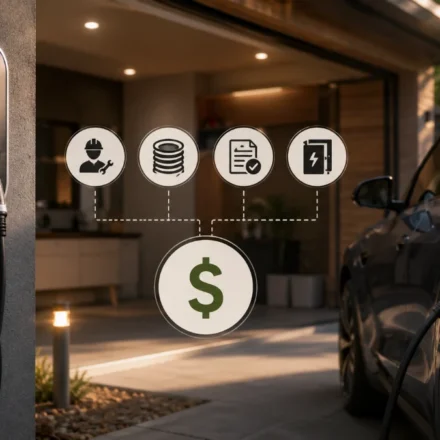
A realistic budget can include:
| Cost category | What it covers |
| Equipment | Machine purchase or lease |
| Delivery | Transport to the site |
| Installation | Placement and setup |
| Payment system | Card/contactless hardware |
| Initial inventory | First product load |
| Connectivity | Cellular or Wi-Fi service |
| Software | Management and reporting tools |
| Insurance | Business and equipment coverage |
| Permits | Local or food-related requirements |
| Maintenance | Repairs and replacement parts |
| Location costs | Commission, rent, or other agreement terms |
The machine’s sticker price is therefore only one part of the investment.
A buyer should calculate total startup cost before deciding whether the opportunity is affordable.
New vs. used equipment
Used equipment can reduce the initial capital requirement, but age matters.
Before buying a used vending machine, check:
- Compressor condition for refrigerated units
- Motors and dispensing mechanisms
- Door and lock condition
- Payment compatibility
- Availability of replacement parts
- Energy consumption
- Physical damage
- Software or telemetry compatibility
A low purchase price is not necessarily a low total cost.
How Does a Vending Machine Make Money?
The business model is straightforward.
The operator purchases products at wholesale or another supply cost, sells them through the machine at a higher retail price, and keeps the difference after operating expenses.
The important calculation is not simply sales revenue.
Gross profit = sales revenue − product cost
Then:
Net operating profit = gross profit − location costs − payment fees − software/connectivity − maintenance − labor/logistics − other expenses
That second calculation is where many unrealistic vending-business claims fall apart.
A machine can generate strong sales and still produce disappointing net profit if the location takes a large commission or the route requires expensive, frequent service trips.
How Much Can a Vending Machine Make?
There is no reliable universal monthly income figure for every vending machine.
Sales can vary enormously by:
- Location
- Product category
- Customer demographics
- Pricing
- Season
- Machine availability
- Competition
- Weather
- Foot traffic
- Operating hours
This is why “every machine makes $X per month” claims should be treated cautiously.
A better approach is to model several scenarios.
Conservative scenario
Assume lower sales, normal product margins, and realistic operating expenses.
Base scenario
Use expected sales based on comparable locations and the proposed product mix.
Strong scenario
Model higher demand without assuming that the best possible month will continue forever.
This gives the operator a range rather than a misleading single-number forecast.
Location Is the Real Asset
The physical vending machine is replaceable. A productive location can be much harder to obtain.
A strong location often has three characteristics:
- A recurring audience
- A reason to purchase
- Limited convenient alternatives
For example, an employee may buy a drink during a work break because walking several blocks to a store is inconvenient. A hotel guest may value a machine because nearby shops are closed.
That is different from simply putting a machine somewhere with lots of people.
Good location categories
Potential locations include:
- Offices
- Apartment communities
- Hotels
- Hospitals
- Gyms
- Manufacturing facilities
- Warehouses
- Colleges where permitted
- Waiting areas
- Certain transportation facilities
Each location has different product requirements.
A gym may favor water and sports-oriented products. An office may support coffee, snacks, and everyday beverages. A hospital may have longer operating hours and a different mix of visitors, staff, and patients.
How Do You Choose Products?
Product selection should follow the customer rather than the operator’s personal preferences.
Start with a small assortment and track what sells.
Useful metrics include:
- Units sold
- Revenue per selection
- Gross margin
- Stockout frequency
- Slow-moving inventory
- Expiration or spoilage
- Customer requests
A vending machine should not be treated as a static shelf. Product mix can change as customer behavior becomes clearer.
If one item repeatedly sells out while another remains untouched, the data is telling the operator something.
Avoid excessive product variety
More products do not automatically mean more sales.
Too many slow-moving items can consume valuable shelf space and increase inventory complexity.
The objective is to maximize the productivity of the available selections.
Cashless Payments Can Improve the Customer Experience
Modern customers increasingly expect convenient payment options.
A connected vending machine can support compatible cards, contactless payments, and mobile wallets in addition to cash.
Cashless payment also creates transaction data that can be useful for operators.
However, payment technology has costs. Operators should consider:
- Terminal purchase or rental
- Transaction fees
- Connectivity
- Software charges
- Processor terms
- Compatibility with existing equipment
The goal is not to install every possible payment method. It is to provide the methods customers actually use at an acceptable operating cost.
Why Remote Monitoring Matters as a Business Grows
One machine is easy to inspect.
Twenty machines are harder.
A larger fleet creates a route-planning problem. Drivers need to know which machines actually require replenishment, maintenance, or another visit.
Telemetry and vending-management software can provide information such as sales, payment activity, machine status, and other operational data.
365 Retail Markets, for example, provides vending technology combining payment hardware and vending-management capabilities for operators.
The benefit is not that technology makes service unnecessary. It helps operators decide where service should happen first.
That can become increasingly important as route density grows.
Traditional Machines vs. Smart Equipment for Operators
A new operator does not necessarily need the most advanced vending machine available.
| Priority | Basic machine | Smart/connected machine |
| Initial simplicity | Strong | Moderate |
| Cashless payments | Depends on hardware | Usually easier to integrate |
| Remote monitoring | Limited | Stronger |
| Inventory visibility | Often manual | Better with connected systems |
| Fleet management | More manual | More centralized |
| Technology cost | Lower | Higher |
| Best fit | Small/simple operation | Larger or more complex operation |
A useful upgrade path can be:
Reliable machine → cashless payment → telemetry → centralized management → advanced analytics
There is no requirement to buy every layer on day one.
When Does AI Make Financial Sense?
Artificial intelligence becomes more interesting when the operation has enough data and complexity to benefit from it.
Computer vision is particularly relevant to smart coolers and open-shelf retail. 365 Retail Markets currently markets PicoCooler Vision for automated product recognition.
For a conventional spiral vending machine, computer vision may add complexity without solving a significant problem.
Demand forecasting can be more broadly useful, but it still depends on historical sales data.
The principle is simple:
Do not buy AI because it is available. Buy it because it improves a measurable business outcome.
Smart Coolers and Micro Markets Are Expanding the Model
Traditional vending is increasingly being joined by smart coolers and micro markets.
A micro market allows customers to browse products directly and use self-checkout technology. A smart cooler provides a smaller secured version of that concept.
These formats can support wider product assortments than a conventional vending machine, particularly fresh or irregularly shaped products.
NAMA’s latest U.S. census identifies micro markets and smart coolers as important parts of the broader convenience-services industry, and reports continued growth across the sector.
For operators, the choice is therefore no longer simply “Which vending cabinet should I buy?”
It can be:
Traditional vending vs. smart vending vs. smart cooler vs. micro market.
What Regulations Should Operators Check?
Regulations depend on jurisdiction.
In the United States, FDA rules require covered operators who own or operate 20 or more vending machines to disclose calorie information for applicable foods, subject to specified conditions and exemptions.
Other requirements may involve:
- Business licenses
- Food permits
- Sales taxes
- Insurance
- Accessibility
- Electrical safety
- Refrigeration
- Location agreements
- Privacy requirements
Camera-enabled equipment deserves particular attention.
In 2025, Ontario’s privacy commissioner found that intelligent vending machines at the University of Waterloo used cameras and face-detection technology to collect identifiable facial images without complying with applicable FIPPA requirements. The regulator also highlighted weaknesses in the procurement process.
The lesson for operators is straightforward: understand the technology and its data practices before installing it.
What Are the Biggest Vending Business Risks?
The main risks are not limited to broken machines.
Weak locations
A poor location can make even excellent equipment unprofitable.
Inventory problems
Overstocking creates tied-up capital and potential spoilage. Understocking creates lost sales.
High service costs
A scattered fleet can make replenishment expensive.
Equipment failure
Mechanical failures can stop revenue while still generating fixed costs.
Theft or vandalism
The risk depends heavily on the environment and equipment.
Technology dependency
Connected systems introduce additional software, network, and payment dependencies.
Bad assumptions
Overly optimistic sales forecasts can make a business look profitable on paper when it is not.
The best operators manage these risks through small tests, reliable data, and disciplined expansion.
Read more: Vending Machine Business: Startup Costs, Locations, Profitability and How It Really Works
A Better Way to Start a Vending Machine Business
Instead of buying a large number of machines immediately, a new operator can build a smaller test operation.
A practical sequence is:
- Identify a specific customer group.
- Find potential locations.
- Determine what products those customers need.
- Estimate realistic sales.
- Calculate total operating costs.
- Select equipment that matches the location.
- Track every transaction and expense.
- Improve the product mix.
- Measure the actual result.
- Expand only after the economics work.
This approach reduces the chance of scaling an unprofitable model.
The objective is not to own the most machines.
It is to own and operate machines that produce sustainable returns.
Frequently Asked Questions
Is a vending machine business profitable?
It can be, but profitability depends on sales volume, product margins, location costs, payment fees, maintenance, logistics, and other expenses. There is no guaranteed profit level for every machine.
How much money do I need to start?
The amount depends on whether you buy used or new equipment and whether the machines require refrigeration, cashless payments, connectivity, or other technology. Inventory, delivery, and operating reserves should also be included in the budget.
What is the best location for a vending machine?
A good location has recurring demand, sufficient customer dwell time, and a reason for people to purchase on-site. Offices, hotels, apartment communities, hospitals, and certain workplaces can be suitable depending on local conditions.
Do I need permission to place a vending machine?
Usually, you need an agreement with the property owner or manager, and some jurisdictions may require licenses or permits. Food and beverage vending can involve additional requirements.
Should I buy a new or used vending machine?
Used equipment can reduce upfront costs, but buyers should inspect its mechanical condition, payment compatibility, refrigeration system, parts availability, and service history before purchasing.
Do vending machines accept credit cards?
Many modern machines can accept cards and contactless payments through compatible payment terminals. Older equipment may require an upgrade or replacement payment system.
Is a vending machine business passive?
It is better described as partially automated rather than completely passive. Operators still need to source products, replenish machines, maintain equipment, manage locations, and monitor finances.
How often should a vending machine be restocked?
There is no universal schedule. Restocking frequency should be based on actual sales velocity, product shelf life, machine capacity, and location demand.
Is AI necessary for a vending business?
No. Basic equipment with reliable payments and good location economics can work without AI. Advanced analytics and computer vision become more useful when they solve specific problems or support larger, more complex operations.
What is the biggest mistake new vending operators make?
One of the biggest mistakes is buying equipment before securing or validating a strong location. The machine is only a tool; customer demand ultimately determines whether the operation has viable economics.
Final Verdict
A successful vending machine business is therefore less about finding a magical machine and more about building a repeatable retail system. The strongest operators understand their customers, control inventory, monitor costs, choose locations carefully, and add technology when it improves the economics.