Old Hollywood Style: History, Fashion, Icons, and How to Wear the Look Today
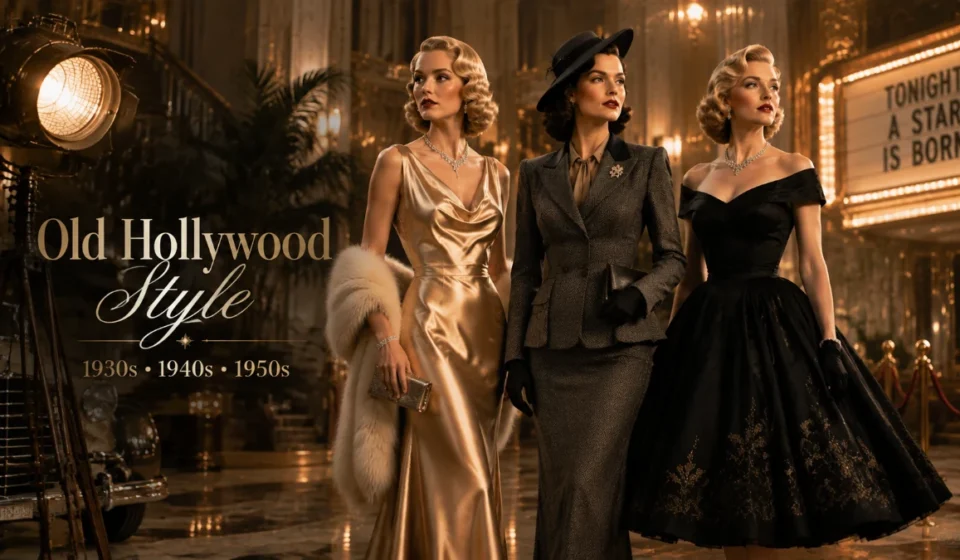
Old Hollywood style is the polished glamour associated with Hollywood’s Golden Age, especially the 1930s, 1940s, and 1950s. Its visual language includes fluid gowns, precise tailoring, satin and velvet, sculpted hair, elegant accessories, and a deliberate sense of occasion.
But the aesthetic is more interesting than the familiar image of a red dress, pearls, and red lipstick. It developed through the interaction of fashion, costume design, cinema, celebrity publicity, photography, and changing ideas about glamour. Understanding those connections makes it easier to recognize the look-and to wear it today without turning it into a costume.
What Is Old Hollywood Style?
Old Hollywood style is best understood as a visual language of cinematic glamour, rather than a rigid fashion category belonging to one decade.
Its most recognizable qualities are:
- Elegant, deliberate silhouettes
- Fluid or sculpted garments
- Luxurious-looking fabrics
- Refined tailoring
- Carefully styled hair and makeup
- Strong but controlled accessories
- Formality appropriate to the occasion
- A clear visual focal point
The aesthetic changed considerably over time. A narrow, bias-cut 1930s gown does not look the same as a structured 1940s suit or a full-skirted 1950s dress. What connects them is the emphasis on proportion, polish, movement, and visual impact.
That distinction matters when recreating the look. You do not need an authentic 1940s garment. A contemporary dress can communicate the same aesthetic if its silhouette, fabric, styling, and overall presentation carry the right visual cues.
Where Did Old Hollywood Style Come From?
The aesthetic developed alongside the American studio system and the growing cultural power of movies.
As cinema became a mass form of entertainment, stars became fashion references. The Metropolitan Museum of Art notes that the growing popularity of cinema in the 1930s encouraged women to look to actresses for wardrobe inspiration. Its collection of a circa-1932 American evening dress also demonstrates the period’s use of bias cutting, low backs, deep V-necks, and beadwork that enhanced movement and caught light.
This relationship worked in both directions.
Fashion gave filmmakers materials and silhouettes that could create memorable characters, while movies gave audiences highly visible examples of how clothing could communicate glamour, status, romance, sophistication, or danger.
Costume designers therefore had a role that went far beyond making attractive clothes. A costume could help establish a character’s personality, social position, transformation, or relationship with the audience.
The result was a system in which clothing became part of the star image.
Costume Was Not the Same as Everyday Fashion
One important historical distinction is often lost in modern discussions.
A spectacular gown worn by a movie star was not necessarily representative of what most people wore every day. Film costumes could be exaggerated for character, lighting, movement, narrative effect, or visual spectacle.
At the same time, successful screen images could influence consumer fashion.
That creates a useful distinction:
Film costume → star image → publicity and photography → public aspiration → fashion influence
Old Hollywood’s influence therefore cannot be measured simply by asking whether ordinary people copied a particular movie dress exactly. Its greater impact was the creation of recognizable ideals of glamour.
Old Hollywood Fashion Through the Decades
There is no universally agreed start and end date for the term. In fashion discussions, the strongest references generally come from the 1930s through the 1950s, while the wider classical Hollywood studio era extends beyond those decades.
The safest way to understand the aesthetic is to follow its evolution.
1930s: Fluidity, Drape, and Bias-Cut Glamour
The 1930s are especially important to the visual identity of classic Hollywood because dresses became long, narrow, fluid, and body-conscious.
The bias cut was particularly influential. Cutting fabric diagonally across its grain changes how it hangs and allows the material to follow the body with a fluid drape.
The technique was strongly associated with Madeleine Vionnet, whose work helped establish the bias cut as a defining element of 1930s fashion. The Met specifically notes that Vionnet’s mastery and development of bias-cut techniques had an enormous influence on modern women’s clothing.
Hollywood embraced this visual language because flowing garments could create a striking effect on screen.
Typical 1930s references include:
- Long, narrow gowns
- Bias-cut silk and satin
- Deep V-necks
- Low backs
- Draped necklines
- Beaded eveningwear
- Sculpted waves
- Art Deco-era sophistication
The important point is that Hollywood did not invent the bias cut. European designers, particularly Vionnet, were crucial to its development. Hollywood helped popularize the visual language by putting similar forms in front of enormous audiences.
1940s: Structure, Tailoring, and Controlled Glamour
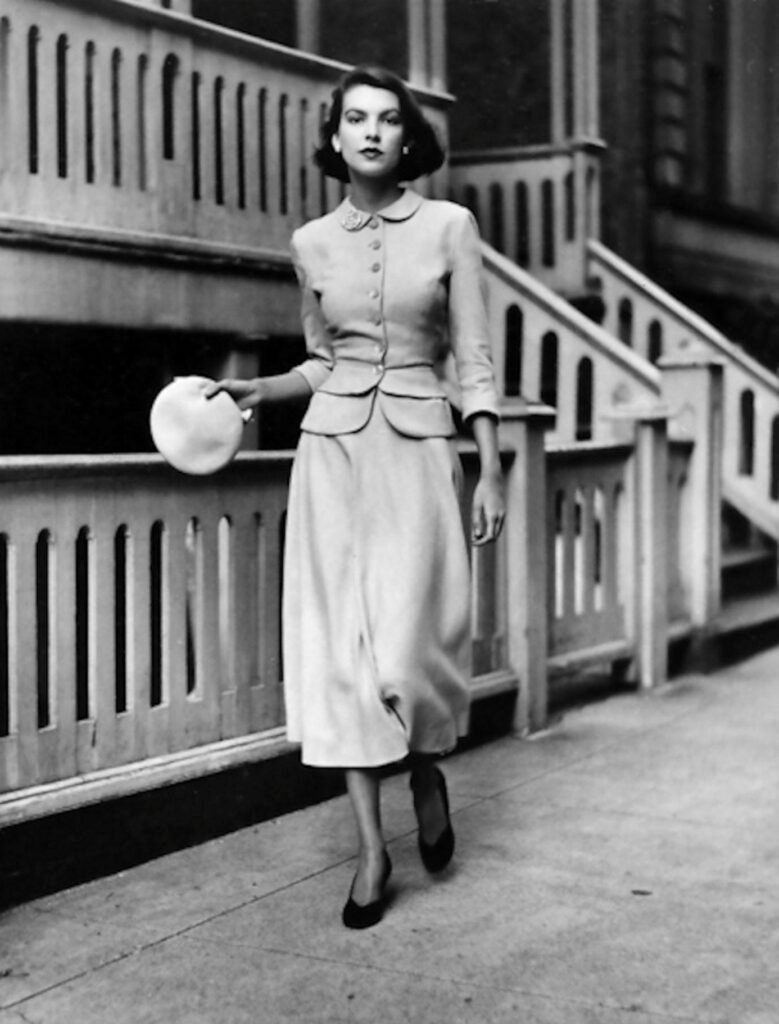
The 1940s brought a stronger emphasis on structure and tailoring.
Wartime restrictions affected clothing production and everyday dress, while pronounced shoulders, fitted jackets, trousers, practical separates, and tailored suits became important elements of the period.
That did not eliminate glamour.
Instead, the decade created a compelling contrast between practical clothing and highly polished presentation. A woman could wear a structured suit during the day and still embody cinematic glamour through her hair, makeup, posture, accessories, and eveningwear.
For modern dressing, this makes the 1940s particularly versatile.
A sharply cut blazer, high-waisted trousers, elegant blouse, classic pumps, and a polished hairstyle can evoke the period without requiring a theatrical vintage outfit.
1950s: Star Power and Sculpted Elegance
The 1950s produced some of the most recognizable images of Hollywood glamour.
Defined waists, fuller skirts, sculpted dresses, elegant evening gowns, polished accessories, and highly finished beauty became powerful visual references.
But even this decade cannot be reduced to one silhouette.
Grace Kelly represents restrained elegance and controlled sophistication.
Marilyn Monroe represents a more sensual, figure-conscious interpretation.
Audrey Hepburn brought a cleaner, more understated approach.
Marlene Dietrich challenged conventional femininity through tailoring and trousers.
These differences demonstrate an important fact: Old Hollywood was never one person’s style.
The Decades at a Glance
| Era | Defining visual character | Modern interpretation |
| 1930s | Fluid, elongated, draped | Bias-cut dress, satin, cowl neckline |
| 1940s | Structured and tailored | Strong blazer, high-waisted trousers, polished separates |
| 1950s | Defined waist and formal elegance | Full-skirted dress, fitted eveningwear |
| Early 1960s | Cleaner, transitional glamour | Streamlined tailoring and simpler formalwear |
This distinction prevents a common mistake: treating every vintage-looking Hollywood outfit as though it came from the same period.
The Designers Who Created the Hollywood Image
Celebrity names are easier to remember, but costume designers were fundamental to the aesthetic.
The Smithsonian’s research on Hollywood costume design identifies a broad group of influential designers, including Gilbert Adrian, Travis Banton, Orry-Kelly, Walter Plunkett, Edith Head, Jean Louis, Helen Rose, Irene Sharaff, and William Travilla.
Their work shows that the Hollywood image was a collaborative creative system rather than the invention of one designer.
Gilbert Adrian
Gilbert Adrian was one of the defining designers of MGM’s early studio era.
He became MGM’s principal costume designer in 1928 and remained there until 1941. His work helped establish memorable screen identities for major stars and contributed to Hollywood’s wider influence on fashion.
Adrian’s importance is especially clear when studying the 1930s. His designs for stars including Joan Crawford and Jean Harlow demonstrated how costume could exaggerate silhouette, personality, and screen presence.
Edith Head
Edith Head is one of the most celebrated costume designers in Hollywood history.
The Smithsonian describes her as one of the most prolific and celebrated movie designers of the 1930s through the 1970s. She received 35 Academy Award nominations and eight wins, making her the record-holder for the most wins for costume design.
Head’s career also illustrates why costume design should not be treated as simple fashion decoration. Her work involved understanding character, actor, director, period, silhouette, and the visual requirements of filmmaking.
So while Edith Head is an essential name in any discussion of Hollywood glamour, she was one major figure within a much larger design tradition, not the sole creator of the aesthetic.
The Signature Elements of Old Hollywood Fashion
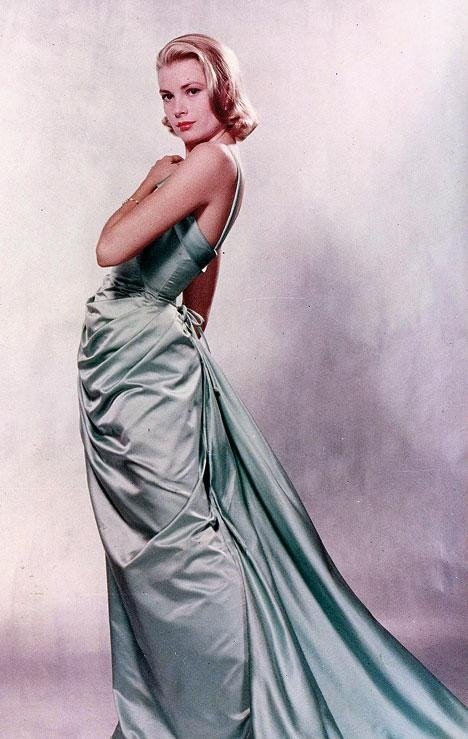
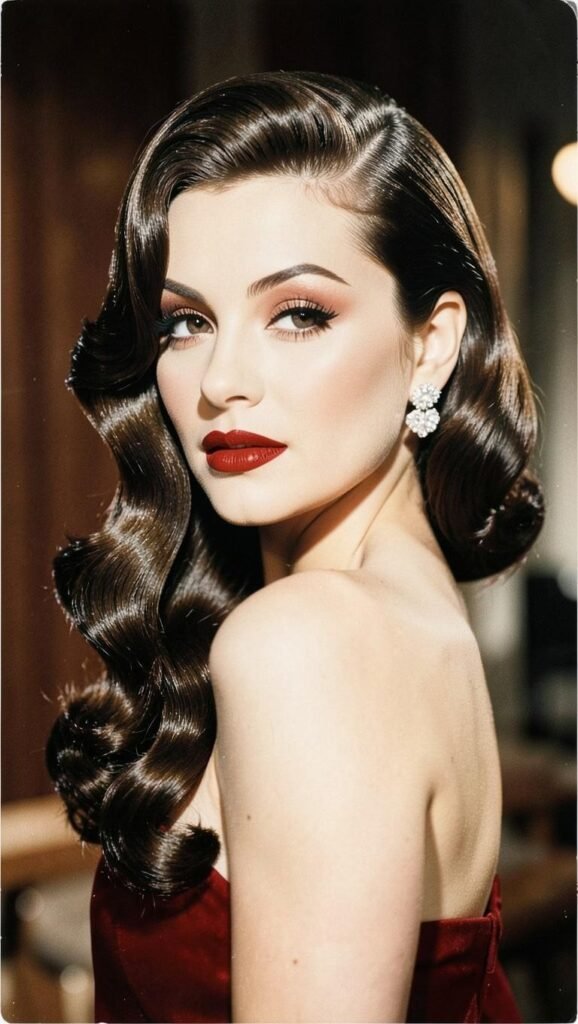
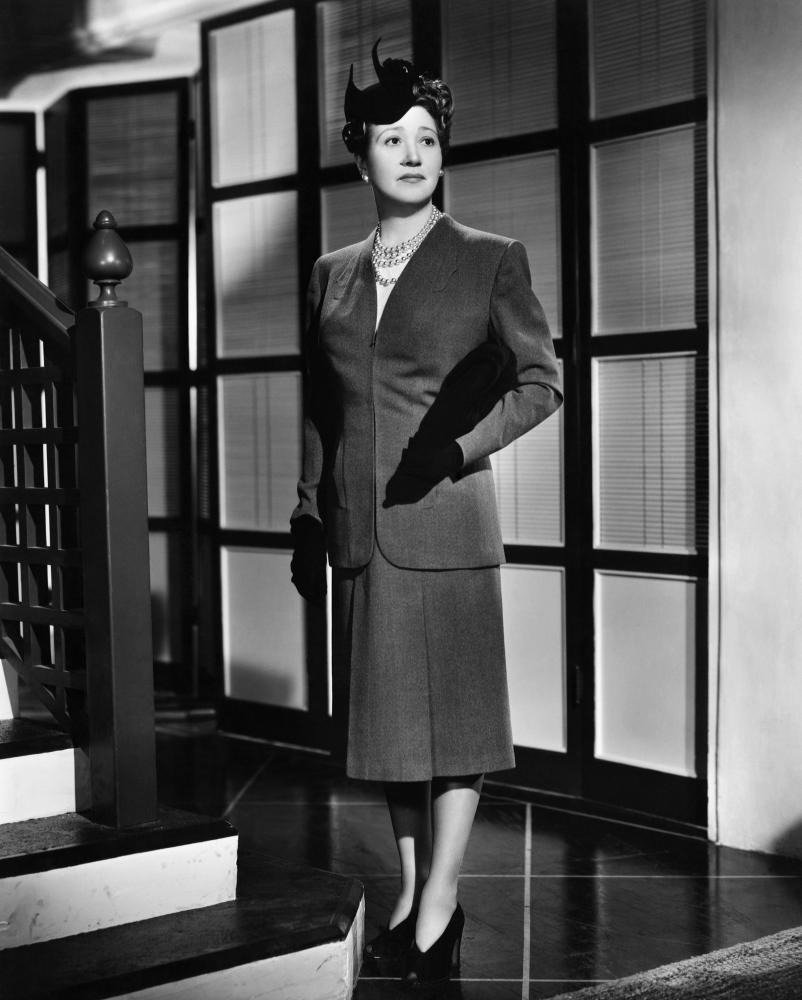
Silhouette Comes First
If you want an outfit to communicate classic Hollywood glamour, start with its shape.
Strong references include:
- Bias-cut columns
- Defined waists
- Full skirts
- Sculpted shoulders
- Fitted jackets
- Long, flowing lines
- Elegant draping
The silhouette establishes the historical impression before accessories do.
That is why a beautifully cut modern dress can look more convincing than an authentic vintage outfit with poor proportions.
Fabric Creates the Mood
Commonly associated materials include:
- Satin
- Silk
- Velvet
- Chiffon
- Tulle
- Lace
- Beaded fabrics
These materials can create sheen, movement, texture, or softness.
However, there is no requirement to use expensive fabric. The principle is visual richness, not a particular price tag.
A modern matte fabric can work if the cut is excellent. Conversely, an inexpensive shiny fabric can look unconvincing if the garment is poorly constructed.
Necklines Are Part of the Composition
Classic Hollywood eveningwear often made the neckline a central design feature.
Common references include:
- Cowl necks
- Sweetheart necklines
- Halter necks
- Deep V-necks
- Off-the-shoulder designs
- Draped necklines
The objective is not to make every outfit dramatic. It is to make the neckline work with the overall silhouette.
Accessories Should Have Hierarchy
Pearls, gloves, brooches, earrings, scarves, handbags, and polished shoes can all contribute to the aesthetic.
But adding every recognizable vintage accessory at once usually makes an outfit look theatrical.
A better formula is:
One focal accessory + restrained supporting pieces.
For example:
- Statement earrings + simple gown
- Silk scarf + tailored jacket
- Pearl necklace + clean neckline
- Vintage-inspired handbag + contemporary dress
The eye should know where to look first.
Old Hollywood Hair and Makeup
Hair and makeup complete the visual language.
Hair
Useful references include:
- Finger waves
- Sculpted curls
- Deep side parts
- Brushed-out waves
- Controlled volume
The decade matters. Finger waves suggest an earlier period, while larger brushed-out waves evoke later classic Hollywood glamour.
A modern interpretation does not need to reproduce a historical hairstyle exactly. Smooth, polished waves can capture the same idea while remaining contemporary.
Makeup
Classic Hollywood beauty commonly emphasizes:
- Defined brows
- Carefully lined eyes
- Strong lashes
- A polished complexion
- Defined lips
Red lipstick is strongly associated with the aesthetic, but it is not mandatory.
The more important principle is intentional definition. Modern makeup can be softer while maintaining the polished, camera-ready quality associated with classic glamour.
Old Hollywood Style Icons: What to Learn From Them
| Style icon | Useful reference |
| Grace Kelly | Refined silhouettes and understated elegance |
| Marilyn Monroe | Sensual proportions and figure-conscious eveningwear |
| Rita Hayworth | Fluid gowns and polished waves |
| Marlene Dietrich | Tailoring and masculine-feminine contrast |
| Jean Harlow | 1930s satin and streamlined glamour |
| Lauren Bacall | Relaxed sophistication and tailoring |
| Audrey Hepburn | Clean lines and restrained elegance |
| Cary Grant | Precise, understated tailoring |
| Humphrey Bogart | Classic suits and restrained masculine style |
| Fred Astaire | Formalwear, proportion, and immaculate presentation |
These stars should be treated as different reference points, not interchangeable examples.
That distinction is particularly important when searching for inspiration. Someone who wants Grace Kelly’s elegance needs a different wardrobe strategy from someone inspired by Marilyn Monroe’s more sensual silhouettes.
A Broader Historical Picture
Classic Hollywood history also includes stars such as Anna May Wong, Dorothy Dandridge, Lena Horne, and Hattie McDaniel, whose careers reveal that Hollywood glamour existed within a studio system shaped by racial barriers and unequal opportunities.
Their inclusion matters because “Old Hollywood” was not a culturally neutral space. Access to leading roles, costume budgets, publicity, and glamorous screen representation was uneven.
Recognizing that history makes the aesthetic more complete rather than reducing it to a narrow collection of familiar celebrity images.
Old Hollywood Menswear
Classic Hollywood menswear is often less about ornament and more about precision.
Its strongest references include:
- Well-fitted suits
- High-waisted trousers
- Crisp dress shirts
- Traditional ties or bow ties
- Pocket squares
- Polished leather shoes
- Structured coats
- Tuxedos for eveningwear
Cary Grant is a useful reference for understated tailoring, while Fred Astaire demonstrates how impeccable proportions and presentation can make formalwear distinctive without excessive decoration.
For modern dressing, you do not need vintage tailoring.
A contemporary dark suit with a clean shoulder line, appropriate trouser length, polished shoes, and restrained accessories can capture the spirit remarkably well.
The same rule applies as in women’s fashion:
Fit matters more than the number of retro details.
How to Wear Old Hollywood Style Today
The most successful modern interpretation does not recreate an entire decade.
It translates the design principles.
Start With One Historical Reference
Choose one dominant element:
- Bias-cut dress
- Satin
- Velvet
- Sculpted waves
- Classic tailoring
- Pearl jewelry
- Dramatic neckline
- Vintage-inspired handbag
Then build the rest of the outfit with contemporary pieces.
Outfit Formula 1: Modern Evening Glamour
Satin slip dress + minimalist heels + one statement earring + polished waves
The dress supplies the historical reference. Contemporary accessories keep it from looking like a costume.
Outfit Formula 2: Tailored Hollywood
Dark blazer + high-waisted trousers + silk or polished blouse + classic pumps
This draws more heavily from 1940s tailoring and works for situations where a full evening gown would be inappropriate.
Outfit Formula 3: Casual Glamour
Straight-leg jeans + fitted top + silk scarf + classic shoes + structured handbag
The clothing is contemporary, while the scarf, proportions, and grooming introduce the vintage influence.
Outfit Formula 4: Modern Menswear
Contemporary tuxedo + crisp white shirt + bow tie + polished shoes + minimal accessories
The formal foundation evokes classic Hollywood without requiring a historical reproduction.
How to Dress for Different Occasions
| Occasion | Best interpretation | What to avoid |
| Wedding guest | Elegant dress with one vintage-inspired element | Full period costume |
| Gala | Satin, velvet, dramatic neckline, or controlled train | Multiple competing statement pieces |
| Date night | Cowl-neck dress, polished hair, restrained jewelry | Excessive theatrical styling |
| Office | Tailored jacket, elegant blouse, classic trousers | Costume-like accessories |
| Party | Velvet, subtle sequins, statement earrings | Combining every retro element |
| Everyday | Silk scarf, classic shoes, structured bag, polished hair | Recreating an entire decade |
The occasion should determine how much historical reference you use.
Old Hollywood Style vs. Vintage Fashion
These terms are related but not identical.
Vintage fashion generally refers to garments from an earlier period, although the exact definition of “vintage” varies by fashion context.
Old Hollywood style is an aesthetic that can be recreated entirely with contemporary clothing.
That means you do not need an authentic 1930s gown to achieve a classic Hollywood effect.
In fact, a modern satin dress with a strong silhouette and contemporary accessories may communicate the aesthetic more effectively than an authentic vintage garment that does not fit properly or suit the occasion.
Historical Reproduction vs. Modern Inspiration
| Approach | What it means |
| Historical reproduction | Attempts to recreate a particular period accurately |
| Vintage fashion | Uses genuine older garments |
| Old Hollywood-inspired | Borrows recognizable cinematic glamour |
| Modern interpretation | Uses contemporary clothing based on historical design principles |
Knowing which approach you want prevents confusion when shopping or styling an outfit.
Old Hollywood Style and Hollywood Regency Are Not the Same
The phrase can create confusion because “Old Hollywood” is sometimes used in interior-design searches.
Old Hollywood style is a broader cultural aesthetic associated with classic cinema, celebrity glamour, fashion, beauty, and visual presentation.
Hollywood Regency is an interior-design style associated with Hollywood glamour and decorative theatricality.
Hollywood Regency commonly uses:
- Mirrored surfaces
- Lacquer
- Velvet
- Glass and crystal
- Decorative furniture
- Strong contrast
- Geometric patterns
- Carefully controlled ornament
If your goal is to dress like a classic movie star, fashion is the relevant category.
If your goal is to decorate a room with Hollywood-inspired glamour, Hollywood Regency is the more precise design term.
This distinction prevents the two search intents from being unnecessarily mixed.
Why Old Hollywood Style Still Matters in 2026
The aesthetic remains relevant because contemporary fashion repeatedly returns to its underlying qualities: glamour, craftsmanship, fluid silhouettes, formal dressing, and visual drama.
That is visible in current awards-season coverage.
Vogue’s January 2026 analysis found stylists continuing to draw on classic Hollywood shapes while deliberately updating them through modern fabrics, proportions, details, and restraint. The article specifically discusses fluid silhouettes, elegant draping, contemporary tailoring, and modernized formal menswear.
The 2026 Golden Globes provided a particularly visible example. Vogue described the red carpet as heavily influenced by Old Hollywood glamour, including gowns that referenced earlier Hollywood silhouettes.
Vintage fashion has also been prominent during the 2026 awards season, with celebrities wearing archival pieces and older silhouettes in contemporary settings.
This is an important distinction:
The current revival is not simply a return to the past.
Modern stylists are taking recognizable elements-drape, glamour, trains, polished tailoring, luxurious texture-and changing the proportions, fabrics, context, or styling.
That is why the aesthetic can feel contemporary rather than nostalgic.
The Best Way to Make the Look Feel Modern
The strictest rule is simple:
Choose the focal point, then edit.
If the dress has dramatic draping, you may not need oversized jewelry.
If the earrings are the focal point, keep the neckline clean.
If the tuxedo is highly distinctive, use restrained accessories.
If the hairstyle is elaborate, simplify the rest.
This approach captures one of the most useful lessons from classic Hollywood costume design: visual impact comes from controlled decisions, not from adding every glamorous element at once.
A modern Old Hollywood-inspired outfit should look intentional rather than historically overloaded.
Read more: Old Hollywood Style: History, Fashion, Icons, and How to Wear the Look Today
What Makes Old Hollywood Glamour So Enduring?
Its longevity comes from something deeper than nostalgia.
The aesthetic is built around principles that remain visually effective:
Proportion.
Clothing has a deliberate relationship between shoulder, waist, hip, length, and volume.
Movement.
Draped fabrics and carefully cut garments create visual interest when the wearer moves.
Contrast.
Soft fabrics can be paired with structured tailoring; understated clothing can support one dramatic accessory.
Polish.
Hair, makeup, shoes, and accessories are treated as part of the complete image.
Restraint.
The most memorable looks usually have a clear focal point.
Those principles can survive even when the actual garments change.
That is why a contemporary designer can reference 1930s glamour without producing a literal 1930s dress.
Frequently Asked Questions
What is Old Hollywood style?
Old Hollywood style is the glamorous visual aesthetic associated with Hollywood’s Golden Age, particularly the 1930s through the 1950s. It combines elegant silhouettes, luxurious-looking fabrics, polished grooming, refined tailoring, dramatic but controlled accessories, and a strong sense of cinematic presentation.
What years are considered Old Hollywood?
There is no universally fixed date range. Fashion references generally emphasize the 1930s, 1940s, and 1950s, while the broader classical Hollywood studio era developed from the late 1920s and extended into the early 1960s.
What makes a dress look like Old Hollywood fashion?
A strong silhouette is the most important starting point. Bias-cut construction, fluid draping, defined waists, elegant necklines, satin or velvet, and polished styling can all create a classic Hollywood impression.
Did Hollywood invent the bias-cut dress?
No. The bias cut existed before Hollywood and was developed and refined by important fashion designers, particularly Madeleine Vionnet. Hollywood helped popularize the visual language of fluid, body-skimming eveningwear by placing similar silhouettes prominently on screen.
Who were the major Old Hollywood costume designers?
Important designers included Edith Head, Gilbert Adrian, Travis Banton, Orry-Kelly, Walter Plunkett, Jean Louis, Helen Rose, Irene Sharaff, and William Travilla. The aesthetic was created by a large community of designers rather than one person.
Was Edith Head the creator of Old Hollywood style?
No. Edith Head was one of its most influential costume designers, but she worked alongside many other designers who shaped Hollywood fashion. Her eight Academy Awards and 35 nominations demonstrate the significance of her career, not exclusive ownership of the aesthetic.
What colors work best for Old Hollywood fashion?
Black, ivory, cream, champagne, deep red, jewel tones, metallics, and rich neutrals all work well. There is no single correct color palette, so silhouette, fabric, and styling should matter more than choosing one supposedly authentic color.
What hairstyle is associated with Old Hollywood glamour?
Finger waves, sculpted curls, deep side parts, polished waves, and controlled volume are common references. The best choice depends on the decade or star inspiring the look.
How can I wear Old Hollywood style without looking like a costume?
Choose one or two recognizable elements and combine them with contemporary clothing. A satin dress with minimalist accessories, a velvet jacket with modern trousers, or polished waves with a current suit can capture the aesthetic without reproducing an entire historical outfit.
Is Old Hollywood style still fashionable in 2026?
Yes. Current 2026 awards-season coverage shows continued use of classic Hollywood references, including fluid silhouettes, dramatic gowns, vintage-inspired details, archival fashion, and polished formalwear. Contemporary stylists are generally updating those references through modern proportions, materials, and styling rather than reproducing historical outfits literally.
Final Takeaway
The enduring appeal of old Hollywood style is not really about copying one actress or reproducing a dress from one year.
It comes from a set of design principles that still work: strong silhouettes, beautiful movement, precise tailoring, polished grooming, controlled drama, and a clear visual point of view.
The history makes those principles easier to understand. The 1930s contributed fluid, bias-cut glamour; the 1940s brought stronger tailoring and structure; the 1950s amplified polished star glamour. Costume designers such as Gilbert Adrian and Edith Head helped translate those ideas into memorable screen identities, while the stars who wore their work gave those designs cultural meaning.
The most useful lesson for modern dressing is therefore not “dress like someone from 1955.”
It is to borrow the principle, not the costume.
Choose the silhouette that suits you. Use fabric for texture or movement. Let one detail create drama. Keep the rest edited. And make sure the final outfit belongs to the present as much as it acknowledges the past.
That is what makes classic Hollywood glamour feel timeless rather than dated.